Review by Chris Rennirt
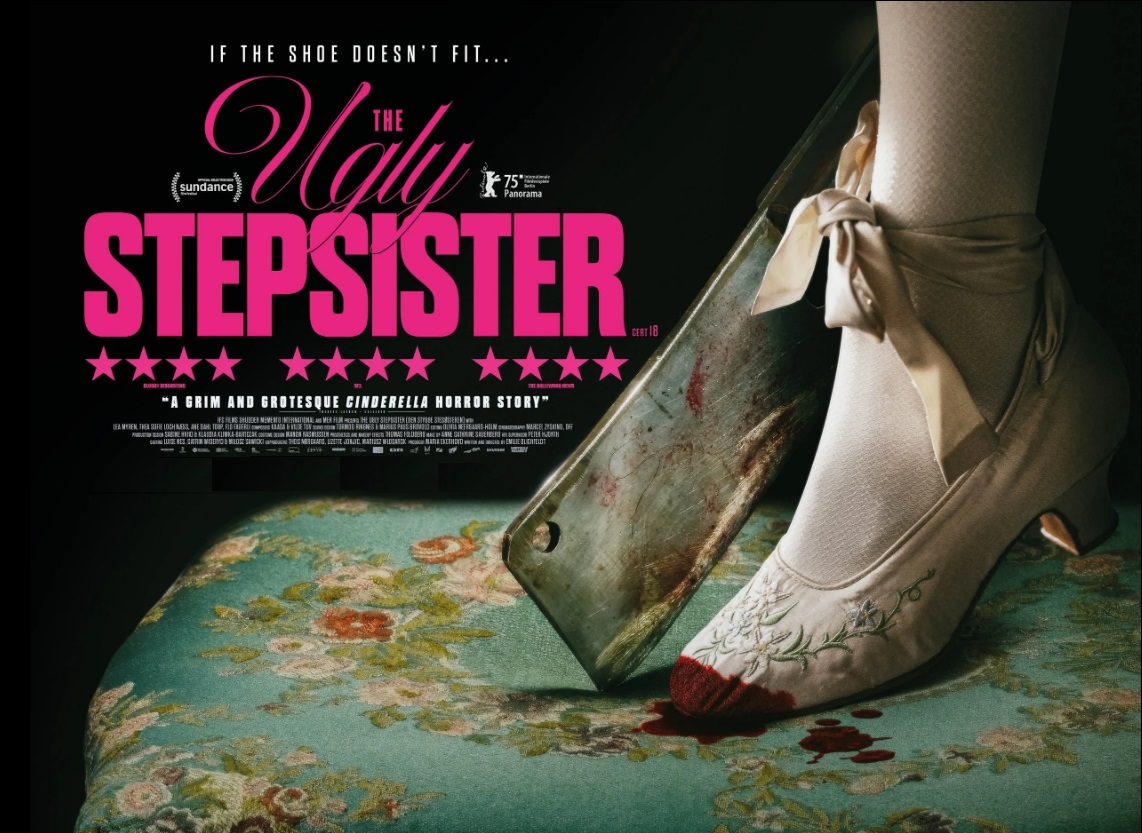
According to Google, there are “hundreds, possibly over a thousand” versions of the Cinderella fairytale worldwide, both written and spoken. The version familiar to most of us, of course, is the highly sanitized, animated Disney film from 1950 made for children, with dancing, singing and the usual light-hearted fun. This iteration was inspired by a French version written by Charles Perrault in 1697 in his Tales of Mother Goose–one with the classic pumpkin, fairy godmother, carriage and glass slipper. A later version by the Grimm Brothers in 1812 was one that took a horrifying departure from anything suitable for children. Now, in 2025, we have a new, most unique addition to the worldwide collective of Cinderella folklore. From Norway, it’s a live-action movie titled The Ugly Stepsister…and it’s surely the goriest, most horrifying, metaphor-rich fairy tale of all! And what an awesome thing that is!
“Twice or thrice I loved thee before I knew thy face or name, but a voice and a shapeless flame.” ~ From Pince Julian’s Most Beautiful Poems
The movie begins with Elvira (Lea Myren) and her younger sister Alma (Flo Fagerli) traveling with their widowed mother, Rebekka (Anne Dahl Torp), to the kingdom of Swedlandia. There, the mother will marry the octogenarian widower Otto (Ralph Carlsson), only because she believes he has money. And Otto’s beautiful, blonde daughter is–you guessed it–Cinderella (aka Angnes here)! But even though this is a Cinderella story, here she is not the focus of it. And thus begins the first, perhaps most important deviation from the stories we know. This story is told mostly through the experiences and perspective of the oldest stepsister—the one deemed by the title to be “ugly.”
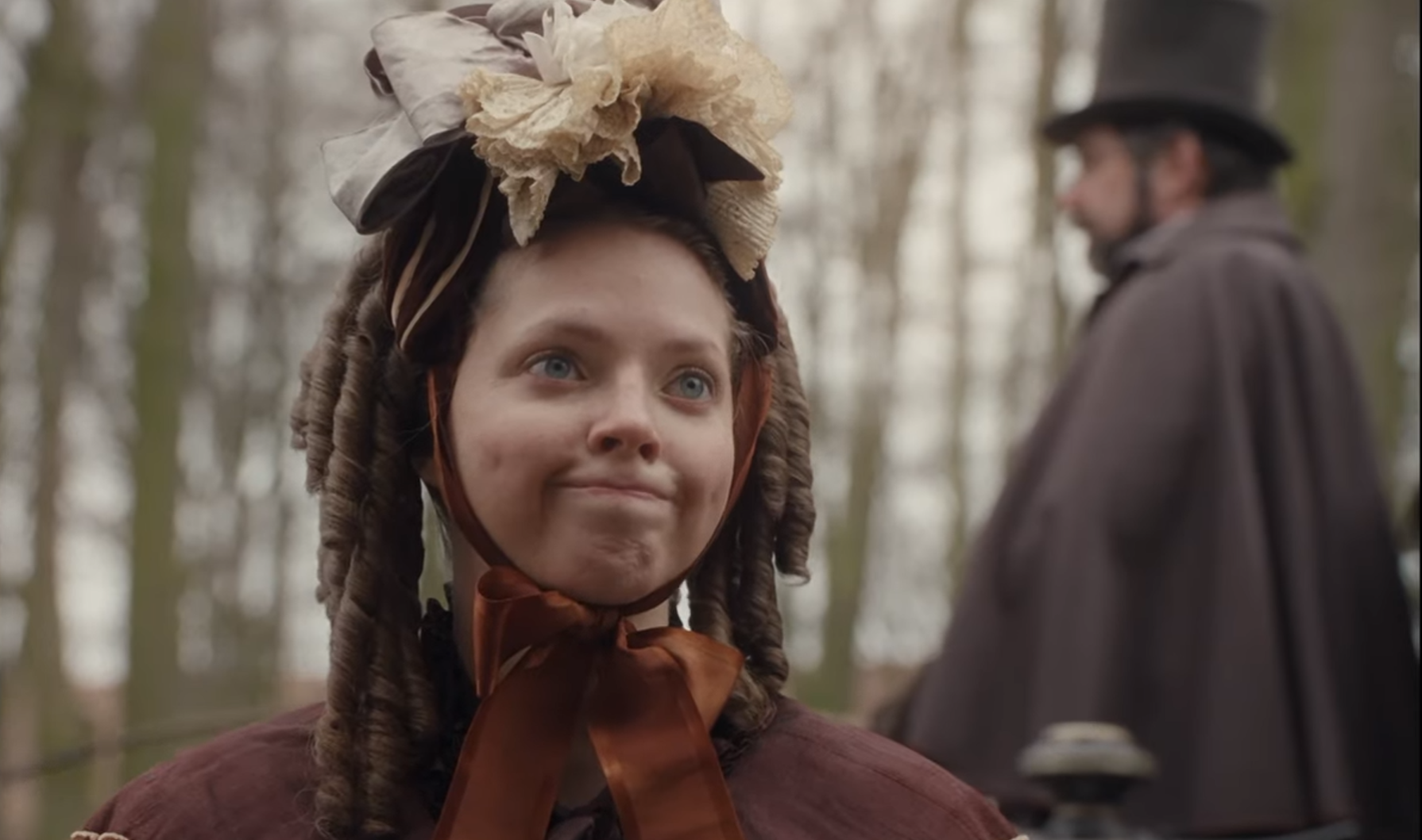
Elvira (Lea Myren) arriving at her new home, unaware of the horrors ahead.
The “ugly” one, Elvira, begins the story as a wide-eyed, plump-cheeked girl, naïve and innocent, amazed by the new, opulent world she inhabits in Swedlandia. She reads romantic poetry habitually, and dreams of romance with none other than the royalty of the realm, Prince Julian—one she already loves in daydreams, longing to be in his arms, married, happily ever after. But is that the ending she’ll get? What’s for sure is that Elvira’s journey to the end is one of pain and suffering….and gore.
“It’s beautiful. You’re changing your outside to fit what you know is on the inside.” ~ Sophie von Kronenberg
Speaking of gore, writer/director Emilie Blichfeldt leaves nothing to the imagination! Blood, vomit, corpses crawling with maggots and on-screen dismemberment are just a few of the delicacies served here. Body horror is the icing on the cake, making this tale of Cinderella more extreme than anything even from the Brothers Grimm. Macro focus in many scenes brings viewers up close to uncomfortable, phobic places. Those with ommetaphobia (fear of things around the eyes) and aichmophobia (fear of sharp objects) beware! Here even jaded horror fans wince with vicarious pain. Clever and powerful with exaggeration and satire, it’s also a masterpiece of the darkest dark humor!
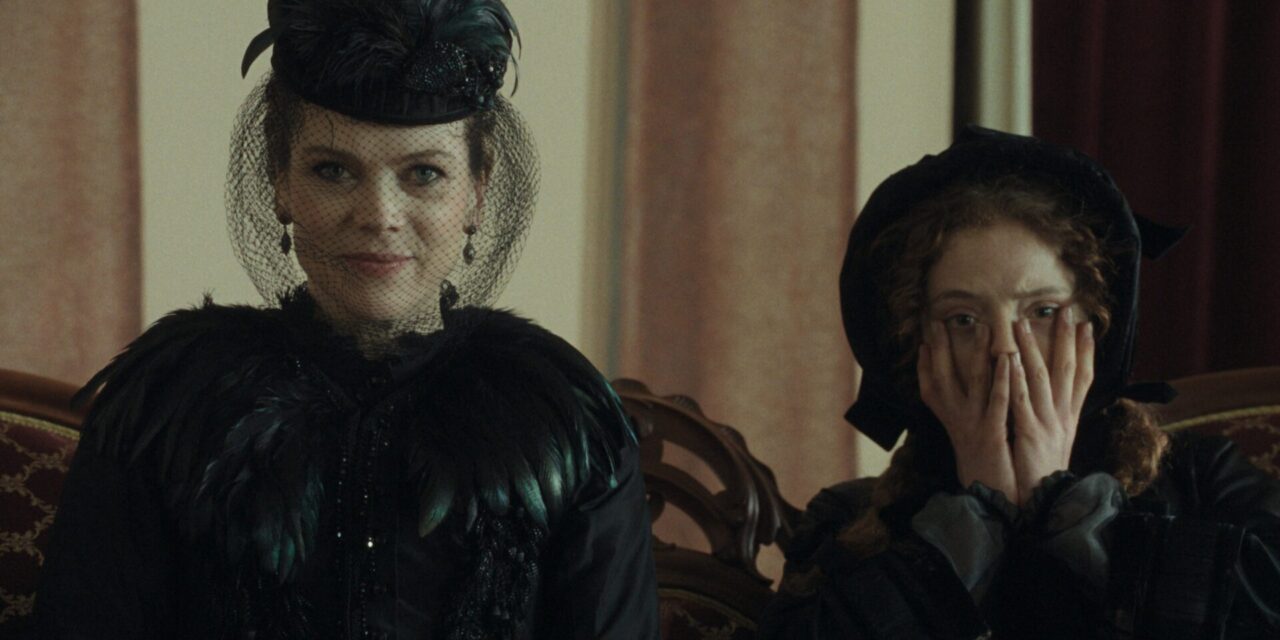
Rebekka (Anne Dahl Torp) and Alma (Flo Fagerli) with two very different reactions to the same horror!
What’s better is the film’s blend of practical and digital effects. CGI is mostly used for close-ups of transformations and blood, achieving a more stylized, even surrealistic look. Most effects, however, were practical and physically there, making them all the more visceral visually. Silicone prosthetics and fake body parts create an ultra-photorealistic result for Elvira’s grotesque changes. Too often, too much CGI ruins an otherwise great horror film, but not here! To the contrary here, a scene with something I won’t name coming out of someone’s mouth is a new classic scene in horror, again thanks to practical effects!
“After a lifetime in the shade of that hump, your beautiful eyes deserve some extra attention.” ~ Dr. Esthtique
This is also a fairy tale where the details of nudity and sex leave little to the imagination. Scenes of naked genitalia are jolting, seeming almost gratuitous at first, but match the movie’s gritty, carnal feel. Juxtaposed extremes of pleasure and pain in the film overall compliment and emphasize each other all the more. This, as a metaphor, highlights the difference in the experiences of Cinderella and “The Ugly Stepsister”–the pleasure of beauty versus the pain of self-perceived ugliness, as well as such perceptions inflicted on her by others. Yes! Elvira is obviously NOT ugly–another overarching tragedy of her experience. With this, the film has layers of intelligent complexity, allowing many diverse interpretations, any of which could be correct depending on one’s justification! But, on the issue of Elvira not really being “ugly,” I stand firm!
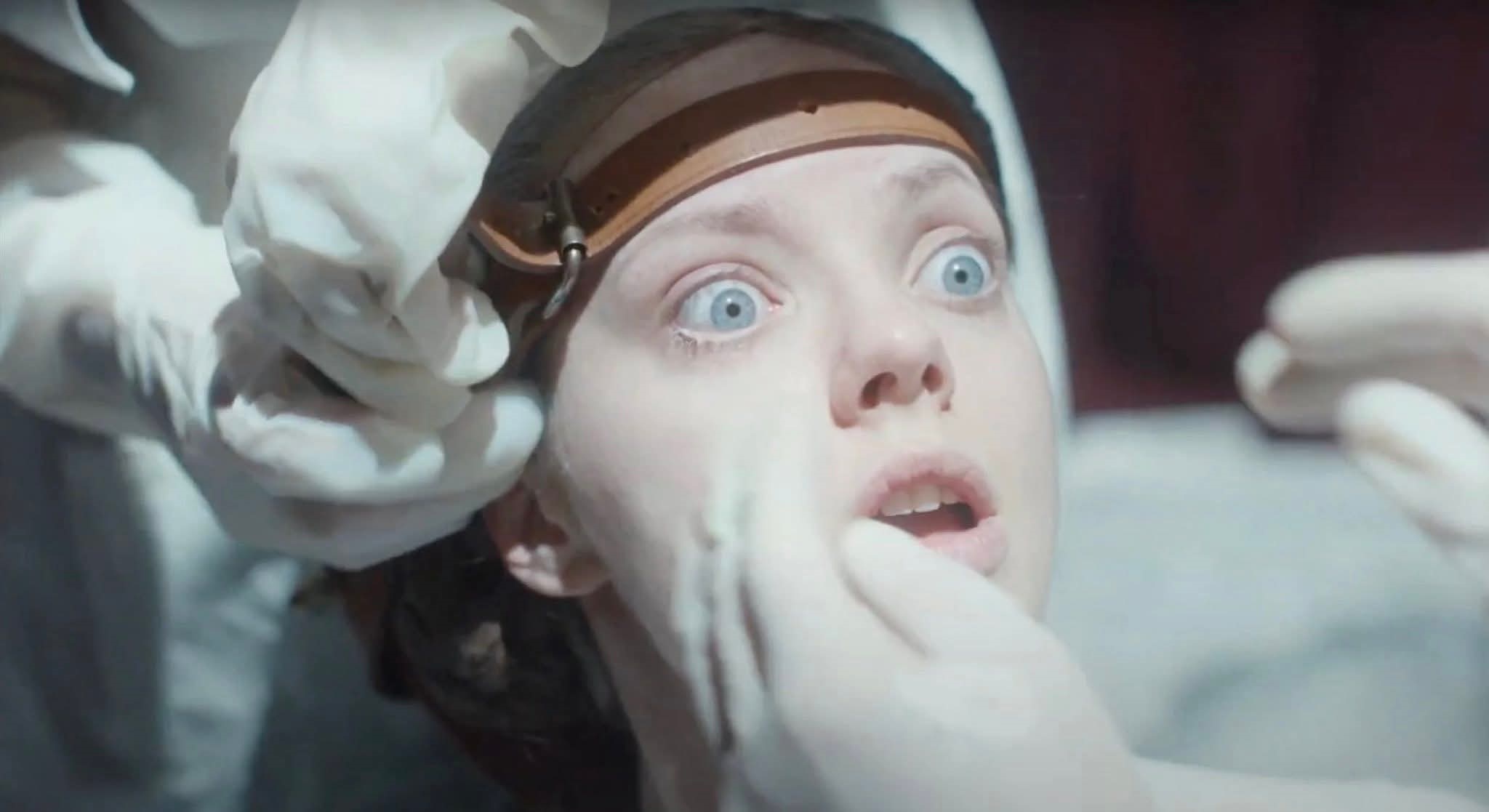
As Dr. Esthtique says, “Beauty is pain.”
This, as more fact than interpretation, is a version of the fairy tale in which Agnes–aka Cinderella (Thea Sofie Loch Næss)–is not the wholesome, entirely sweet virginal type Disney would have. This Cinderella is a typical young woman, albeit exceptionally beautiful, with flaws of greed and arrogance, vulnerable to impulse and desire—just like anyone else! In many ways, she is a tragic version of the fairytale beauty or damsel in distress, tragic simply because she is human. While Agnes is by no means a villain, there are times when she is dislikeable, too flawed, too brutal with words, and too vindictive to be her fairy-tale cliché. Her final act is a coupe de grace, perhaps more brutal than anything else in the film. But, since Agnes is also called Cinderella in the movie, Agnes is, in fact, more than just a counterpart in a similar story; she is Cinderella. And her extremely long, blue-blood name: Agnes Angelica Alicia Victoria von Morgenstierne Munthe of Rosenhoff, while realistic, is almost comical in the film’s tragic context. By contrast, we have simply “Elvira von Stepsister” for Elvira.
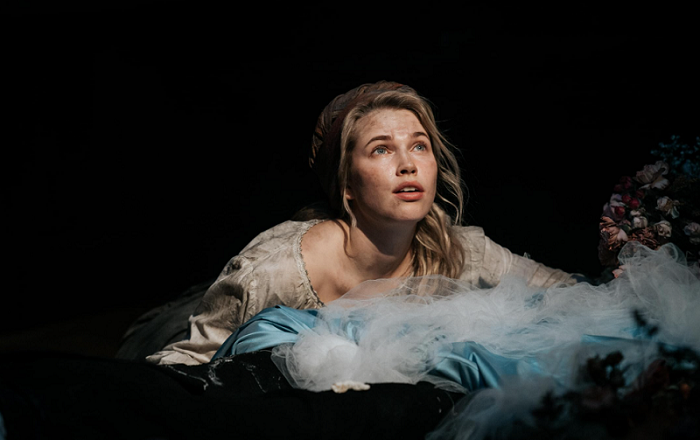
Agnes (Thea Sofie Loch Næss), aka Cinderella, in a scene with all the magic of a true fairy tale.
And is this version’s prince–Prince Julian (Isac Calmroth)–the stereotypic fairytale charmer, cultured with chivalry? While the details about him remain a mystery, we get enough to see a darker side. Is he something far worse than he seems, giving an anti-victory to any woman with a foot to fit the slipper? And Calmroth captures, often in just a look, the subtle yet conspicuous and suspicious character of Prince Julian.
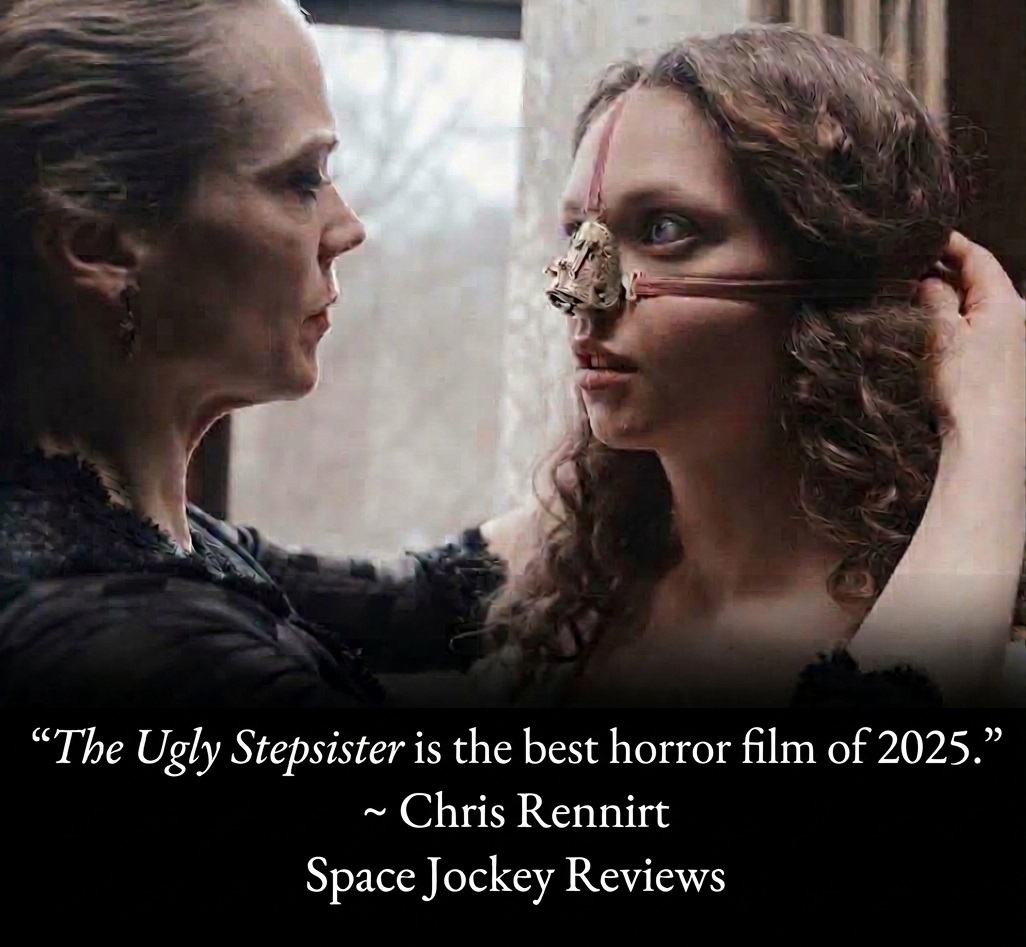
“Removing braces is simple. The nose, on the other hand…” ~ Dr. Esthtique
Also captivating in a supporting role is Flo Fagerli, as Elvira’s younger sister Alma. Fagerli portrays Alma with believable compassion and empathy, providing perhaps the only example of utopian humanity, in a movie otherwise devoid of any. She is the only one who rejects the expectations of society and its attempts to control her. She is even perhaps, in the end, another fairy godmother of sorts.
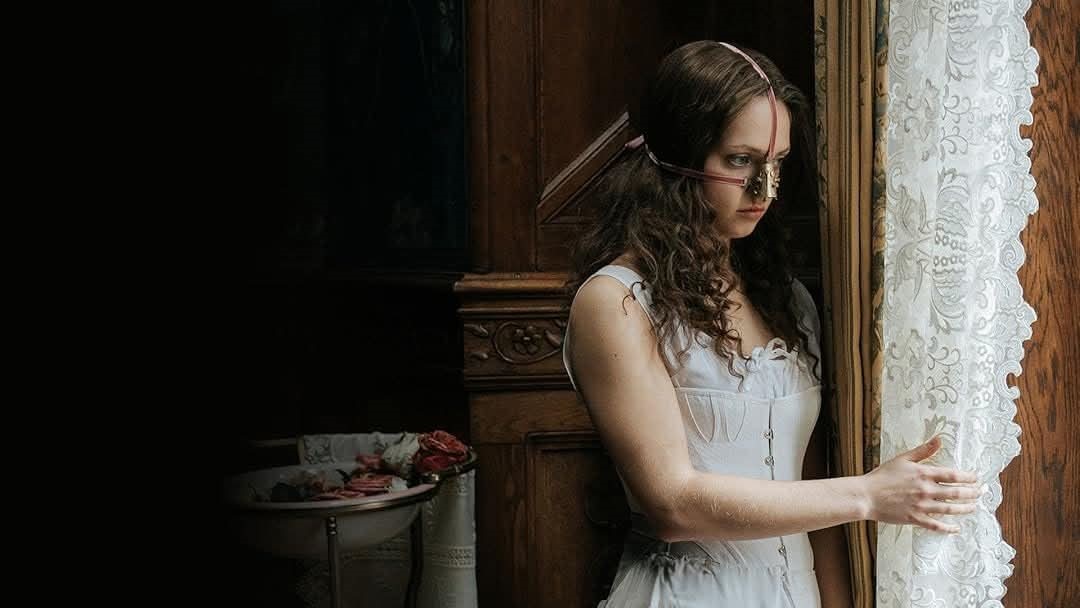
A wistful Elvira (Lea Myren) gazing out a window of Swedlandia
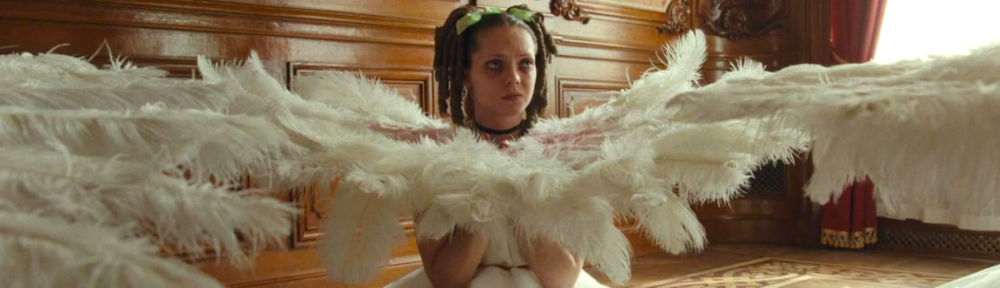
Lastly, but of most importance, is Elvira (Lea Myren), the obvious main character and co-protagonist, along with Agnes. Elvira is a victim of herself and those around her–including those who should love and protect her, specifically her mother. In this highly competitive fairytale world, Elvira will do whatever it takes to get what she wants, fighting tooth and nail, literally. (Unlike in the classic tale, she has no magical help, no fairy godmother, in contrast to the beautiful Cinderella.) In the most basic sense, Elvira does what she does to survive in a world where a woman on her own is nothing without a man of means for support. She also does what she does to survive her mental state, as a coping mechanism. Elvira’s transformation, mental and physical, comes from pain, dealing with it or succumbing to it. And this makes the film a success in yet another genre—psychological horror. In this version of Cinderella, The Ugly Stepsister is not just the film’s title; it is also a label for Elvira that haunts her, defeats her dreams, symbolizes the cruelty in her life, and forms her self-perception. This complexity is an element that elevates the movie to another level, allowing us to look deeper, beneath the gore, opulence and ironic humor. This is what makes the story all the more original and different! And without the performance of Lea Myren, drawing viewers so masterfully into Elvira’s world, none of this would be possible.
“I’d rather die than to my heart lie and be with one I do not love.” ~ Elvira
Although The Ugly Stepsister is Emille Blichfeldt’s directorial debut, I’m already a fan, looking forward to what’s next. This film is exactly what was needed to restore my confidence in horror, especially as it makes something new from something centuries old. Blichfeldt’s bold, graphic style, use of rich, well-developed characters, and up-close, unflinching focus on the horror make me want more already! The Ugly Stepsister also makes, for me, the rare list of movies that I’ll watch again. This one even has a bonus for those who watch past the credits!
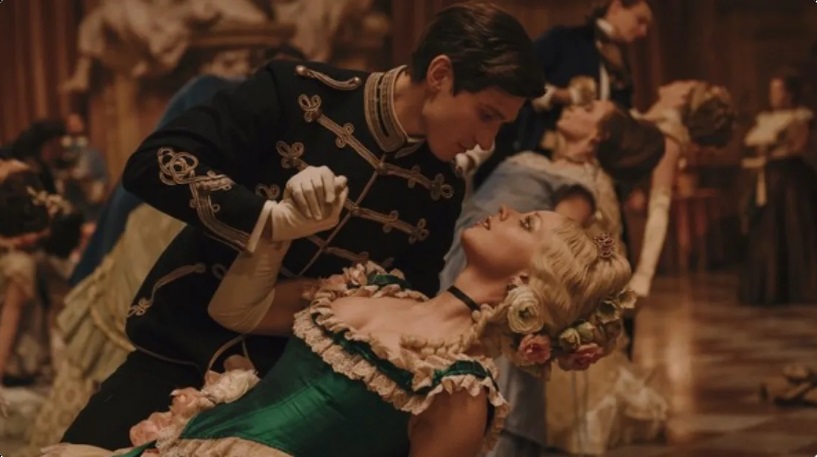
Elvira (Lea Myren) and Prince Julian (Isac Calmroth) share a dance at the ball.
Finally, what would any review of a great movie be without questions for intrigue? A movie with such layers and complexity has many! Who will land the princely prize, and will they really live happily ever after? Will the winner get what they bargained for in the end? (This is, after all, a prince from fairy-tale horror!) Are Agnes and Elvira both greedy for different reasons, to the same end, making them much more alike than they are different? Will we get a sequel to see the “ever after” for Elvira, Agnes, Alma, Rebekka, Prince Julian, and yes, even Otto of Swedlandia? Hopefully so! In the meantime, get your popcorn ready with an extra bowl for puking just in case! And get your thinking cap on for visceral allegories galore! The Ugly Stepsister is the best horror film of 2025!

Rocket Rating – 10
Chris Rennirt is a movie critic and writer in Louisville, Kentucky, as well as editor in chief at Space Jockey Reviews. He has been a judge at many film festivals, including Macabre Faire Film Festival and Crimson Screen Film Fest, and he attends horror and sci-fi conventions often. Chris’ movie reviews, articles, and interviews appear in Effective Magazine and are published regularly on Space Jockey Reviews.