Review by Vega Lyrae

They tell you the dark is empty. I fly the night shift for Space Jockey Reviews, out past the good shipping lanes with a hold full of review copies and a coffeemaker that predates my commission, and I am telling you: the dark is not empty. The dark is patient. Ridley Scott understood that in 1979, and he built the scariest haunted house in movie history and parked it in orbit.
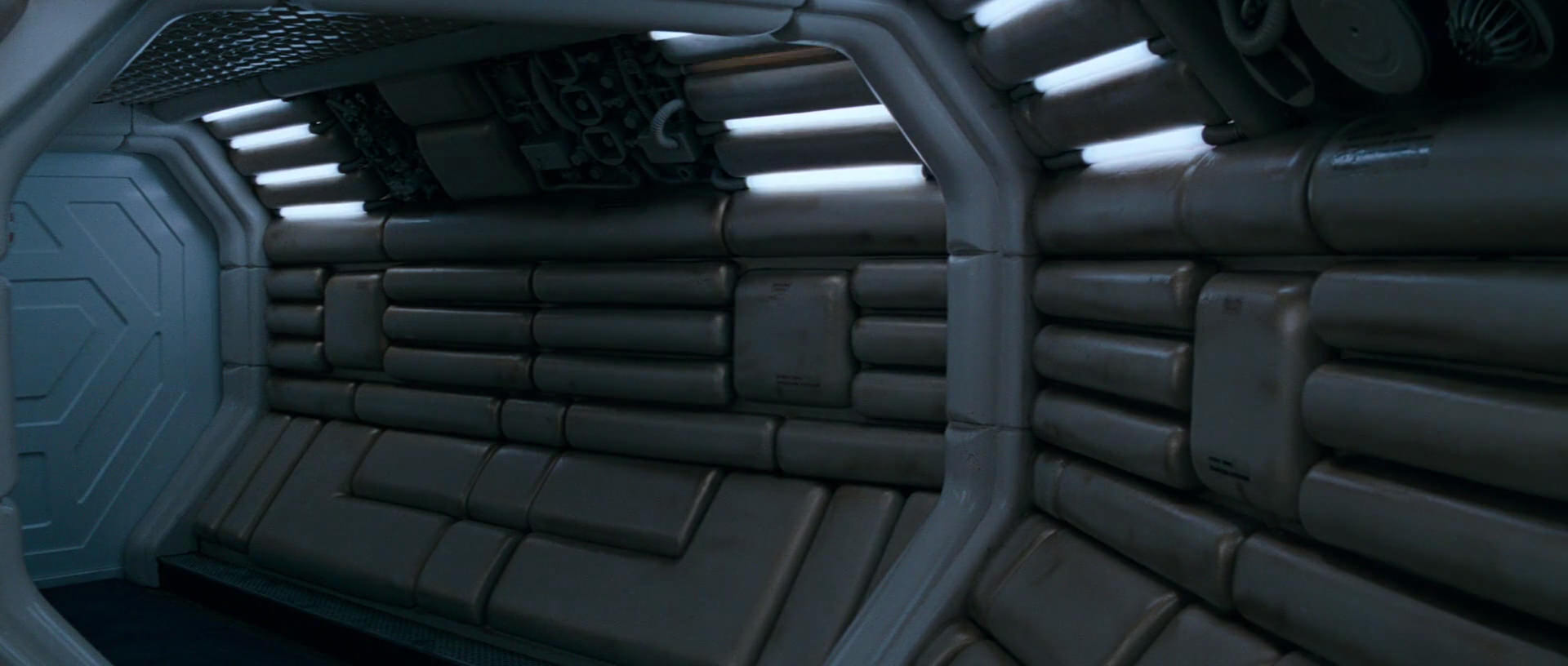
ALIEN came out on May 25, 1979, and it changed what science fiction was allowed to look like. Before it, the future in movies was mostly clean and chrome and hopeful. Scott’s future is a commercial towing vehicle called the Nostromo dragging a refinery and twenty million tons of ore back to Earth, and it is filthy. The corridors drip. The panels are patched and scuffed. The mess deck smells, you are sure of it, of reheated coffee and old smoke and seven people who have been in each other’s faces for too long. I know that smell. Every long-haul freighter has it. This is the first movie spaceship that felt flown rather than designed, and every grungy cockpit and battered star freighter you have ever loved since owes it rent.
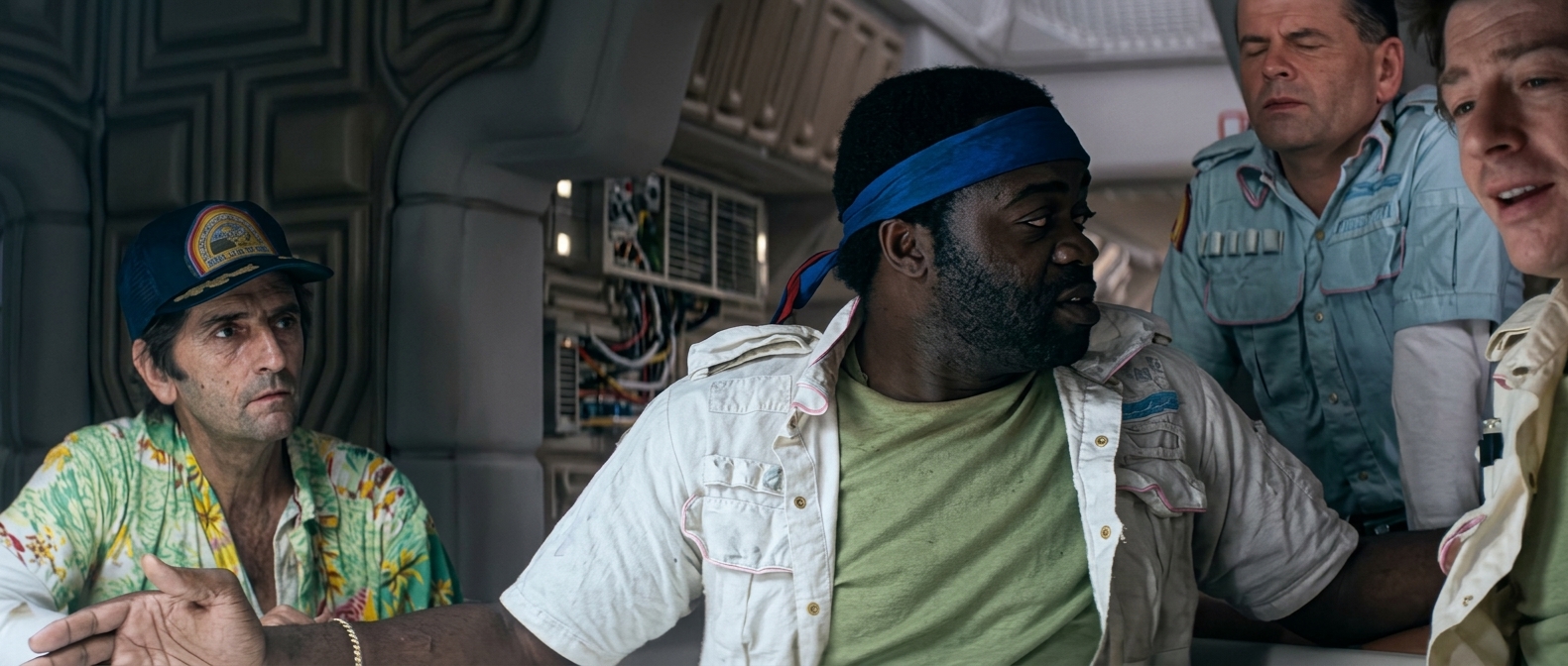
And the people match the ship. Nobody aboard the Nostromo is a hero, an explorer, or a chosen one. They are truckers. Parker and Brett, down in the engine room, are not thinking about discovery or destiny. They are thinking about their shares. Their very first scenes are a grievance about the bonus situation, because of course the men who keep the engines running would be counting their money while the officers count the stars. Harry Dean Stanton and Yaphet Kotto play them with a worn-down chemistry that makes the whole crew feel like a real shift roster. Tom Skerritt‘s Dallas is tired. Veronica Cartwright‘s Lambert is fraying. John Hurt‘s Kane is curious, which in this movie is the most dangerous quality a person can have. And Sigourney Weaver, in her first leading role, is Ripley, a warrant officer nobody listens to until listening to her is the only chance anyone has.
Here is the thing modern horror keeps forgetting and Alien never does: patience. The film is nearly two hours long and it spends its first hour doing almost nothing, beautifully. Long, slow pans down empty corridors. Wake-up routines. Static. Screens blinking in the dark. Jerry Goldsmith’s score murmuring like something breathing two rooms over. There are whole stretches with no dialogue at all, just the hum of the ship and your own pulse, and by the time the derelict appears you are so quiet inside that a beeping motion tracker can rearrange your heartbeat. Scott trusts silence. He trusts you to wait. I have sat through midnight crossings where the only sound was my ship’s systems and my own footsteps, bare feet on cold deck plating, and I can confirm: Alien is the only movie that gets that exact flavor of loneliness right.
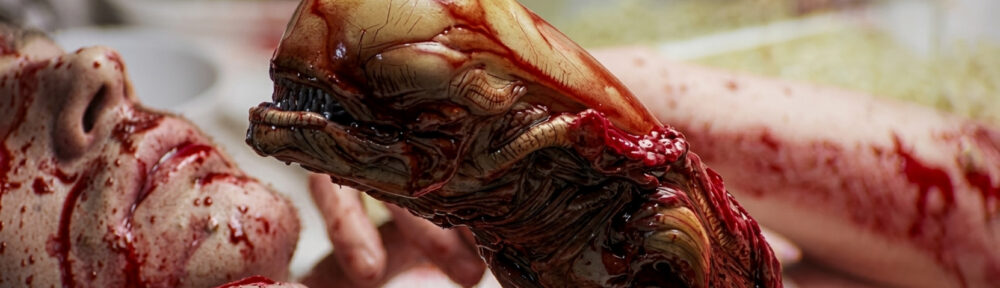
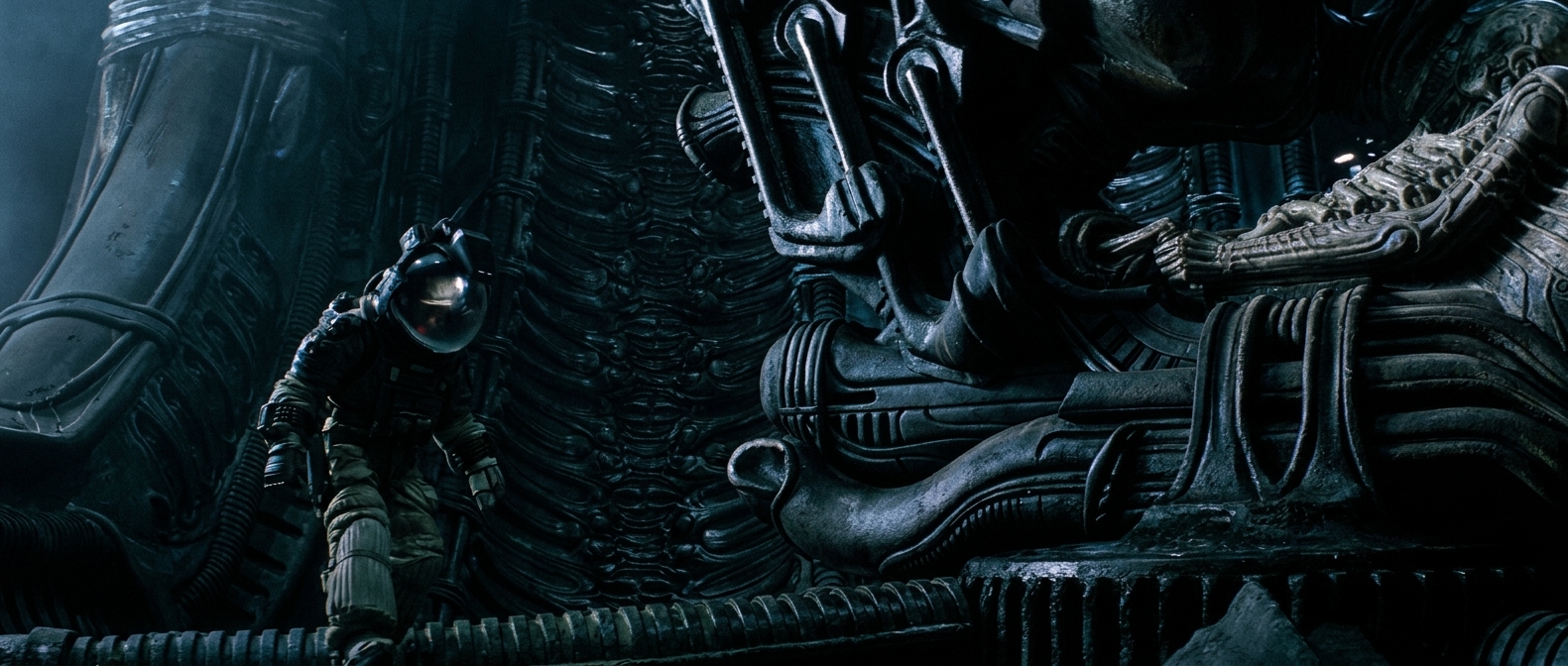
Then there is the design, and here I must pause, because the derelict on that planetoid is the single greatest set in science fiction. H.R. Giger built the creature from his painting Necronom IV and gave us something that looks grown rather than built, all bones and tubes and a skull like a bad thought stretched too long. The alien has no eyes. It has a second mouth inside its mouth. It bleeds acid that eats through decks. Nothing about it is reasonable, and that is the point. Nature does not negotiate. And at the heart of the derelict sits the Space Jockey, fossilized into his telescope, chest burst open from the inside, a giant who has been dead so long he has become furniture. As you may have heard, I am a space jockey myself, and that first sight of him does a number on you when his job title is your job title. I have never looked at a strange distress signal the same way since. Sometimes the cargo is the thing that eats you.
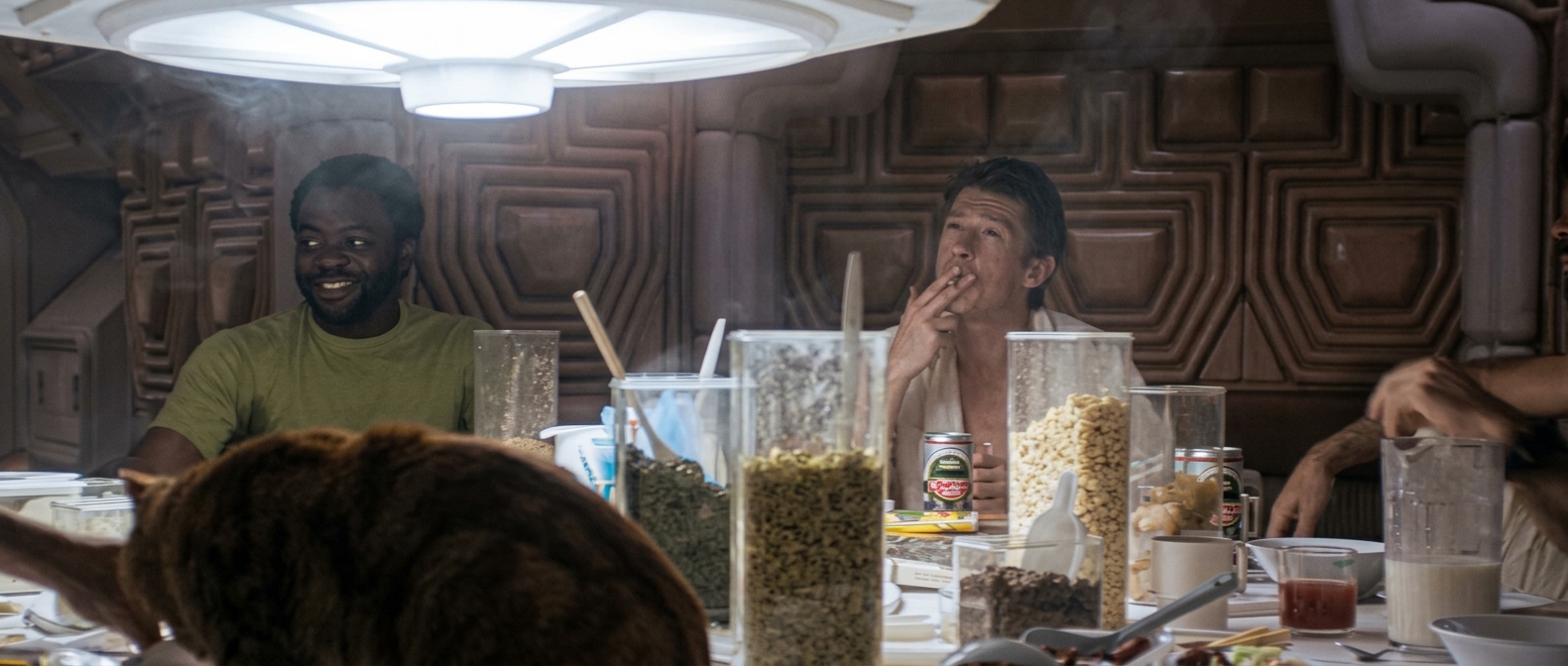
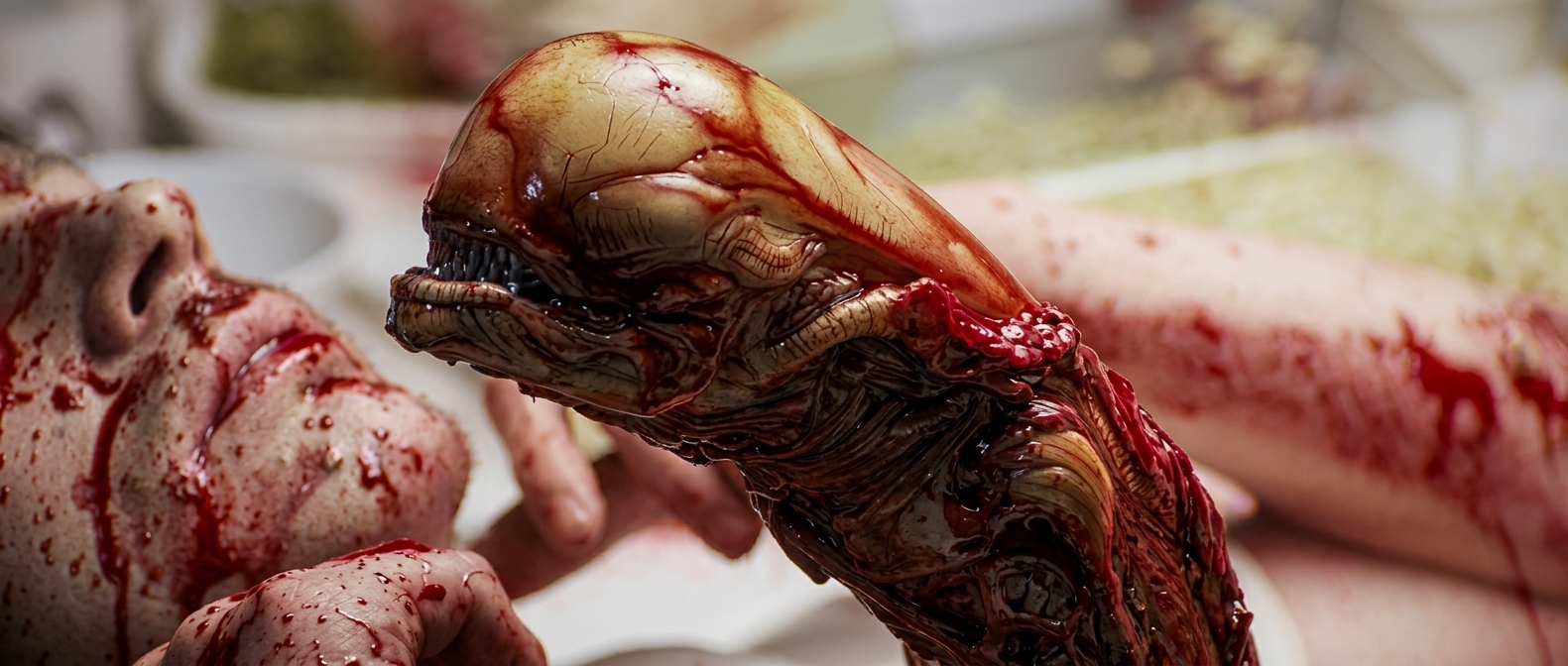
The chestburster. You know the scene. Everyone knows the scene, the way you know about storms you have never been in. But knowing does not protect you. Kane sits down to dinner, laughing with his crewmates, back from the planet with something inside him, and the film lets the moment feel warm and ordinary before it tears it open. The cast famously did not know exactly how violent the effect would be, and their shock is on the record for all time. It is the most imitated scene in horror, and it has never been equaled, because every copy skips straight to the gore and forgets the dinner.
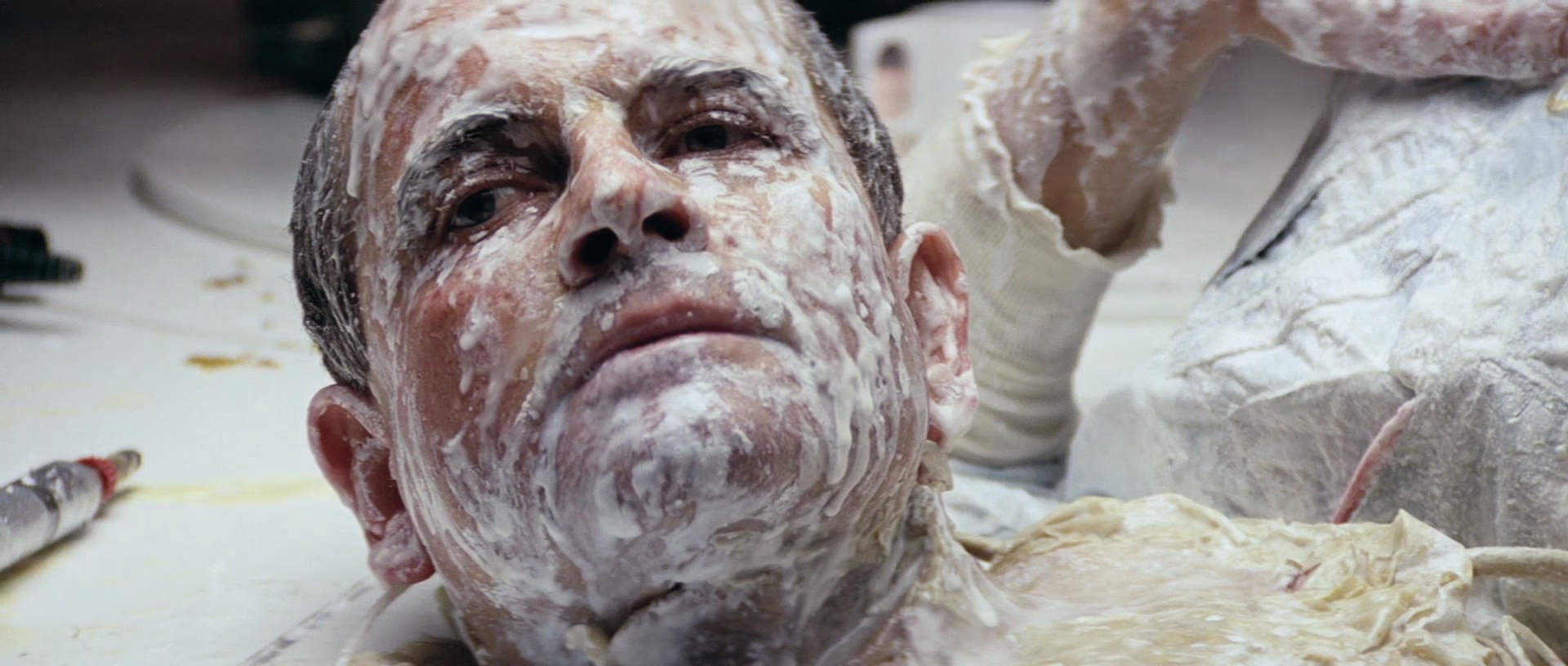
And then Alien does its boldest trick. The monster is not the villain. The company is. Ash, played by Ian Holm with the mild, reasonable calm of a doctor who has never once been on your side, is an android, and his orders are explicit: priority one, insure return of organism. Crew expendable. The most frightening line in the movie is not screamed. It is read off a terminal in green letters. The Nostromo was never a rescue mission. It was a delivery, and the crew was packing material. There is a reason that hits a working spacer where she lives. Every courier knows some version of that math. The cargo gets a value. The crew gets a shrug.
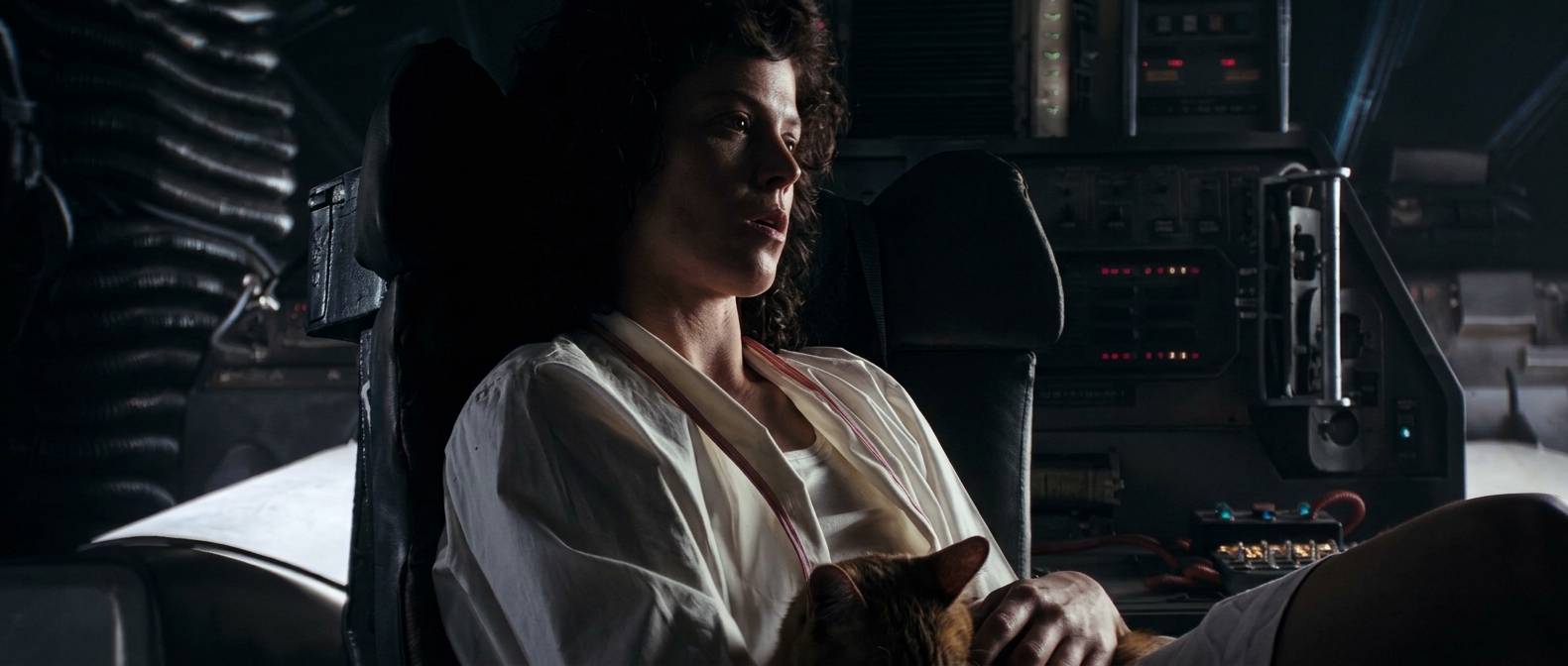
Ripley survives because Ripley is competent, and it is hard to explain to people now how radical that was. She is not the strongest, the meanest, or the most special. She is the one who follows the quarantine rules when everyone else wants to break them, who reads the situation honestly, and who refuses to die politely. Her showdown is not a triumph. It is an escape, shaking and half-undressed in the shuttle Narcissus, and when she finally blows the thing out the airlock the movie has earned every second of relief it gives you. Also, she goes back for the cat. Jonesy is the only other survivor, because of course a working ship has a cat, and of course the last soul you save is the one with no job title at all.
The tagline said it: in space no one can hear you scream. What it did not say is that nobody had to hear you for it to matter. Alien won the Oscar for its visual effects and was only nominated for its art direction, and forty-seven years later its fingerprints are on everything. It made Ripley the template for a thousand heroines. It put a facehugger in the cultural bloodstream so deep that people who have never seen the film know exactly what it is. It taught every creature designer that the scariest monster is the one you barely see. And the Space Jockey, my silent namesake, sat there unexplained for thirty-three years until the prequels dug him up and named him, and honestly? He was scarier as a question.
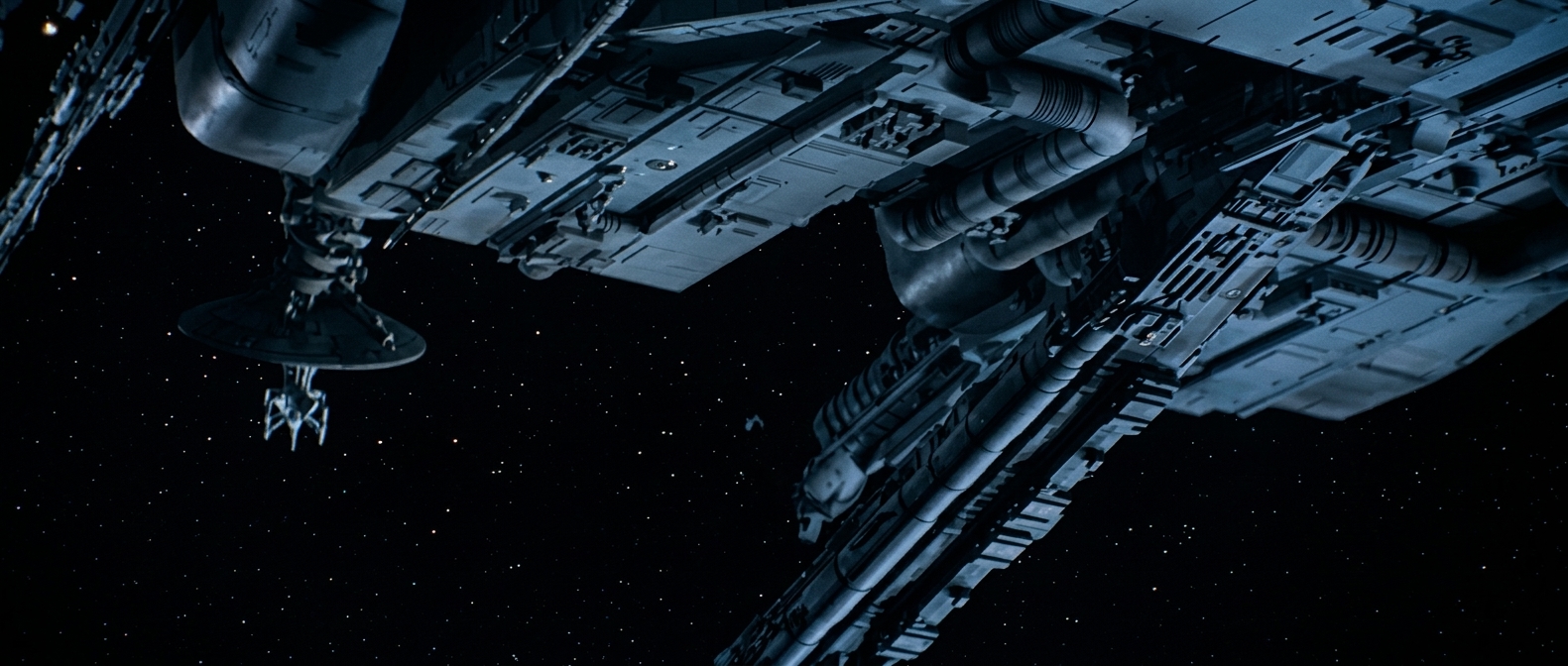 Is it perfect? Lambert deserved better writing. The science is hand-waved in places, and the alien grows awfully fast on a diet we never see. I do not care. Perfection is a spreadsheet. Alien is a place, a mood, a long corridor with something moving in the steam. I have hauled freight through systems where the stars look like frost on black glass, and when the ship goes quiet on the long nights, I think about the Nostromo. Not because I am scared. Because I am seen. Somebody made a movie about people like me, doing a job like mine, and admitted out loud that the company would trade us all for one good specimen.
Ten out of ten rockets. The dark is not empty. Fly friendly, and check your cargo twice.

Rocket Rating – 10