Review by Chris Rennirt
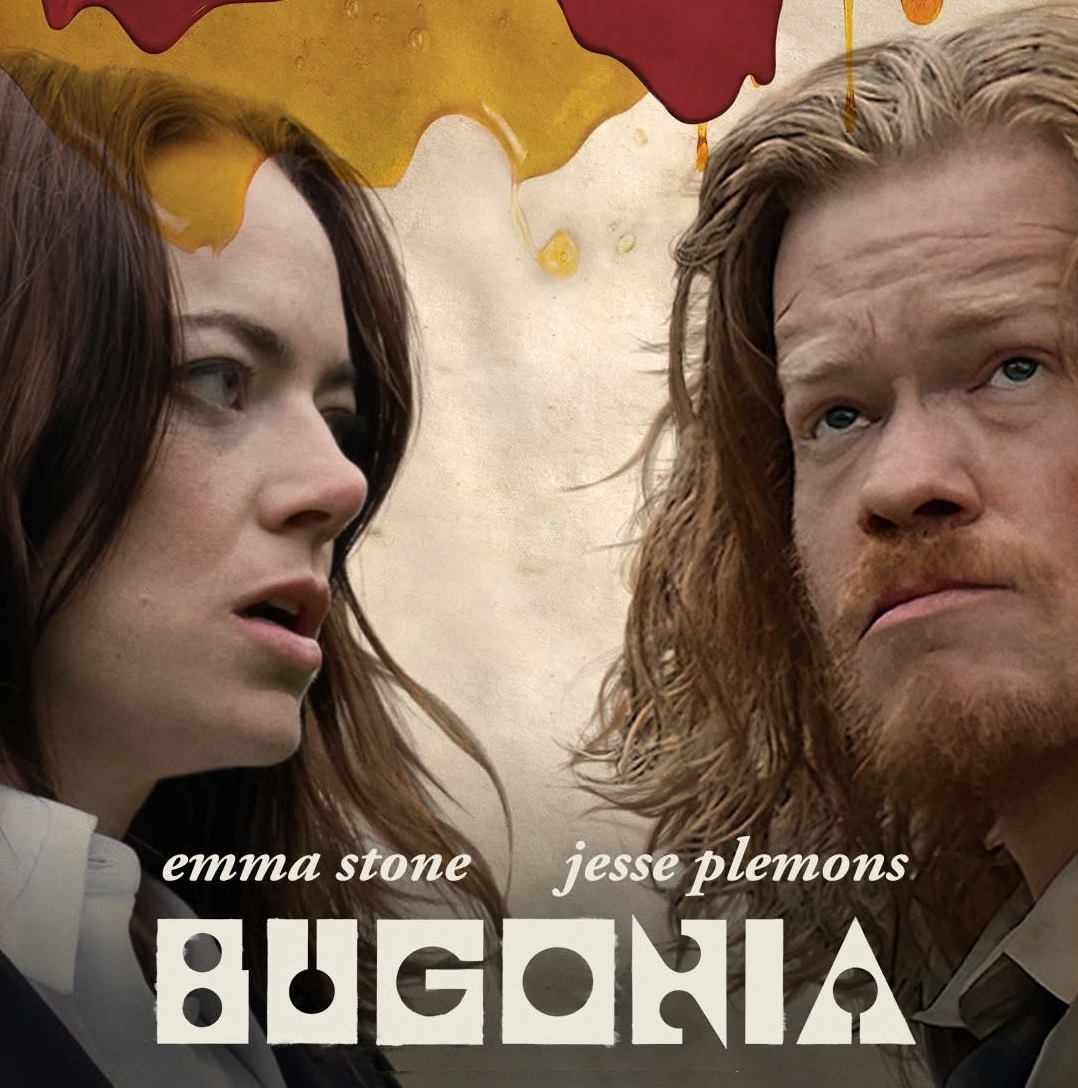
Committed conspiracy theorist Teddy Gatz (Jesse Plemons), who works as an assembly-line packager at Auxolith Biomedical believes the company’s CEO, Michelle Fuller (Emma Stone), is an alien from the Andromeda Galaxy. Further, he believes Fuller to be responsible for his mother’s ill health, the decline of bees in the world, and the destruction of the human race and Earth in general. Consequently, he’s the leader of a two-man vanguard to save us all, or so he thinks. His plan is to be taken aboard the alien mothership by Fuller during the upcoming Lunar Eclipse and negotiate with the Andromedan Emperor to save the world. Unless Fuller comes clean, admits she is an alien, and ensures him safe passage to the mothership, unknown vindictive (possibly violent, torturesome) things could happen to all involved.
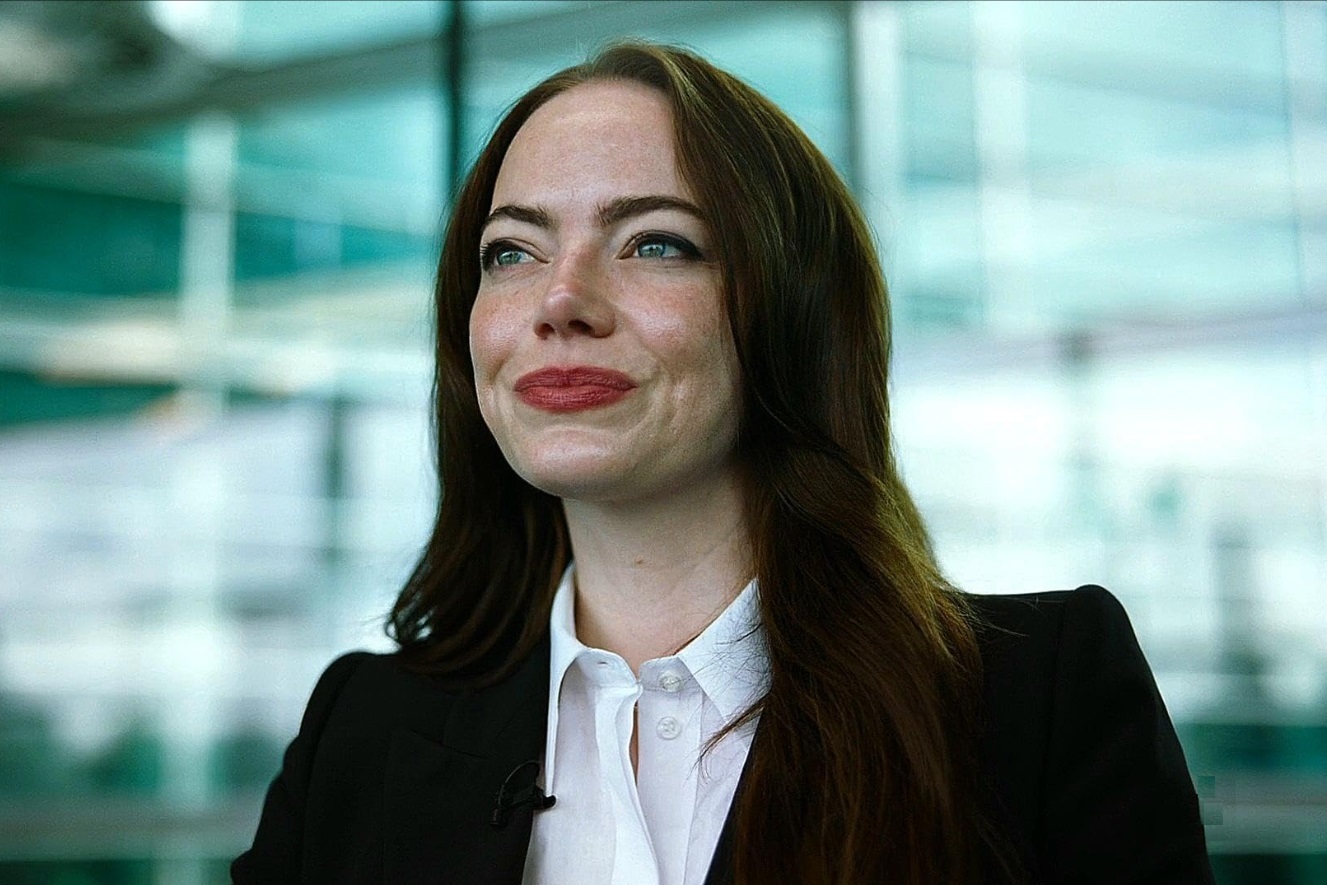
Emma Stone (as Michelle Fuller) in BUGONIA
Immediately, with such a synopsis, Teddy is crazy. Immediately, we expect a pyscho-killer, horror-troped rehash of movie’s seen before, with unknown gore and torture-filled content, energized with copious dark-comedy dialogue. But is it? I’ll never tell. Some movies are better off seen knowing next to nothing in advance. BUGONIA (directed by Yorgos Lanthimos) is one of those movies. It is, for this reason, that my review will contain less than the usual plot details, with little more than a blu-ray cover’s synopsis of plot.

“Sometimes I pass by this place, and I just get this fucking sad, awful feeling, like, ‘What’s going on in there?'” ~ Officer Casey
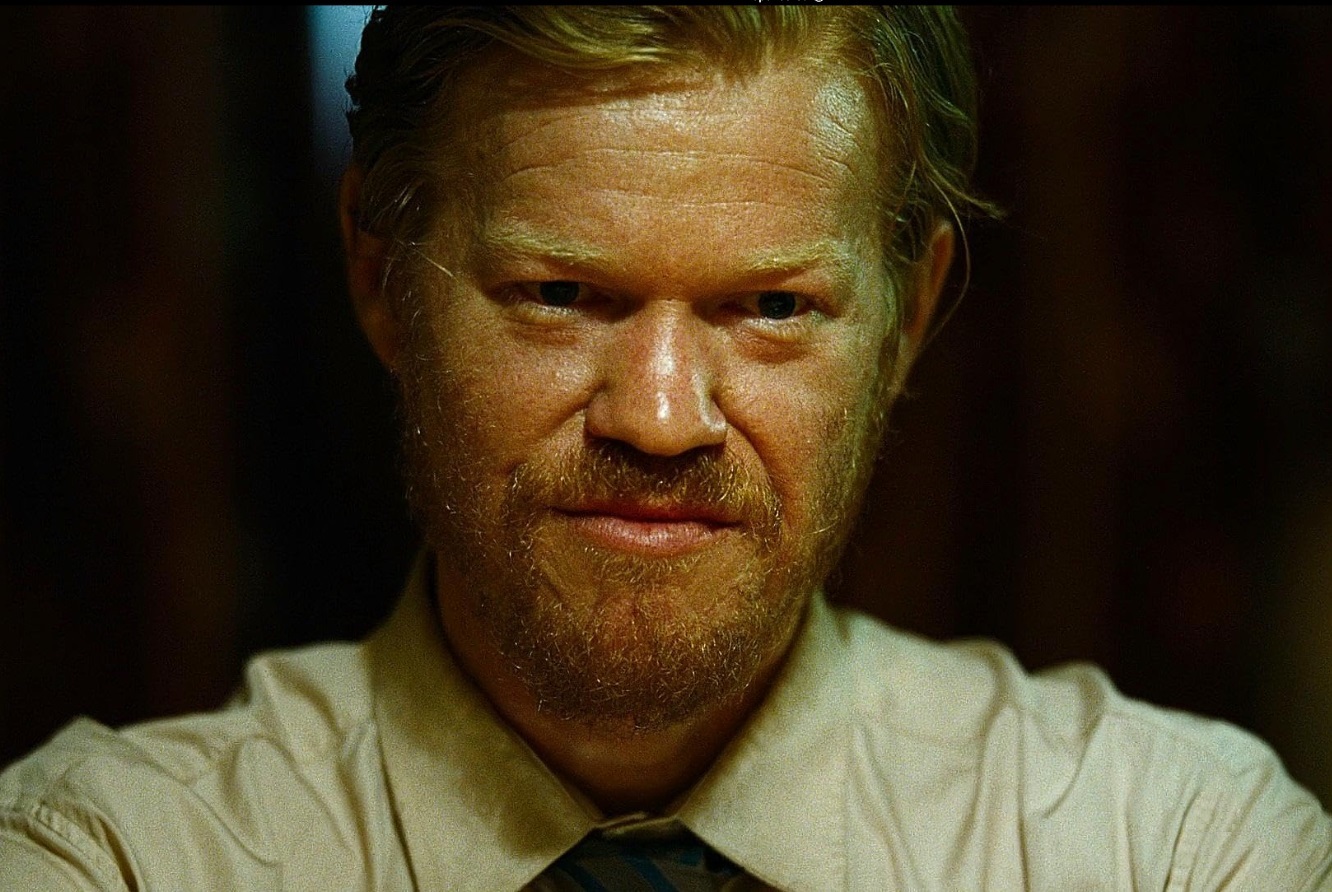
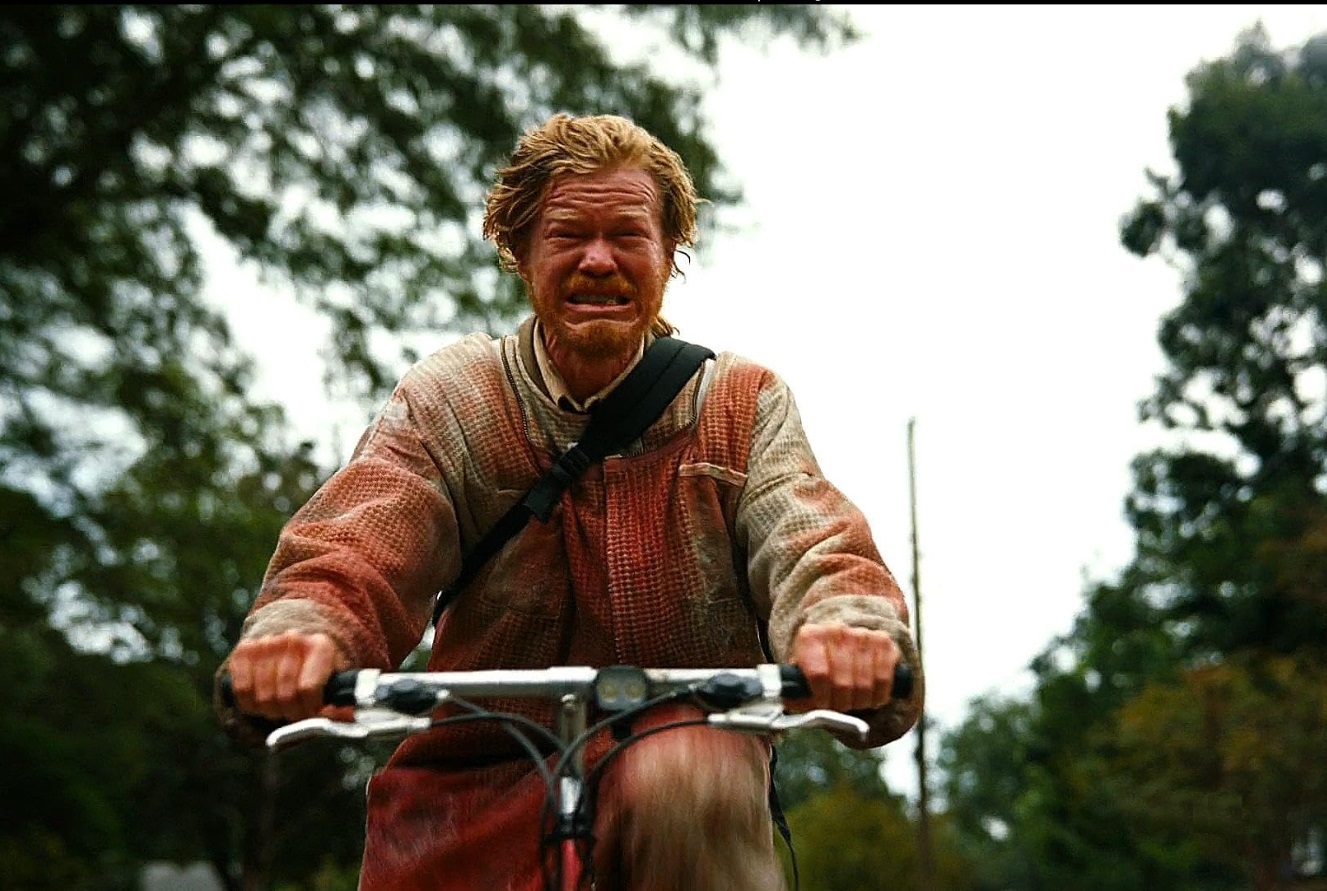
Jesse Plemons (as Teddy Gatz) in BUGONIA
Immediately, as I suspected possible cliché, I was also captivated with something rare in movies but copious in Bugonia. Without ever knowing where it was going, I knew it would be something refreshingly entertaining, even if not satisfying in the end. The film’s style, sinister ambiguity, and dialogue-rich content was easily enough to keep me hooked and intrigued from the beginning. (See the quote from Teddy Gatz at the end of this review, for a sample of that!) With that, Bugonia is immediately alluring and addictive–a movie with fast-talking, genius-level characters, cerebral vocabulary to spare, packed with attention-grabbing, memorable lines worthy of playbacks. Yes, you really have to focus on this one; but, for all the real-time payoff, it’s no chore to focus. As such, it reminds me of two other movies of the type, captivating for their uncommon dialogue and depth, as much as anything else–Pulp Fiction (1994) and From Dusk Till Dawn (1996)–both more than coincidently from one of my favorite directors, Quentin Tarantino. Also refreshing are Bugonia‘s multi-faceted main characters, well-defined with physicality and verbal aptitude, by the best choice of actors. Yes! Even though Bugonia‘s a slow burner, light on action, its dialogue, deft performances, and robust characters engage and pull us in, I think, as well as any frenetic film ever could.
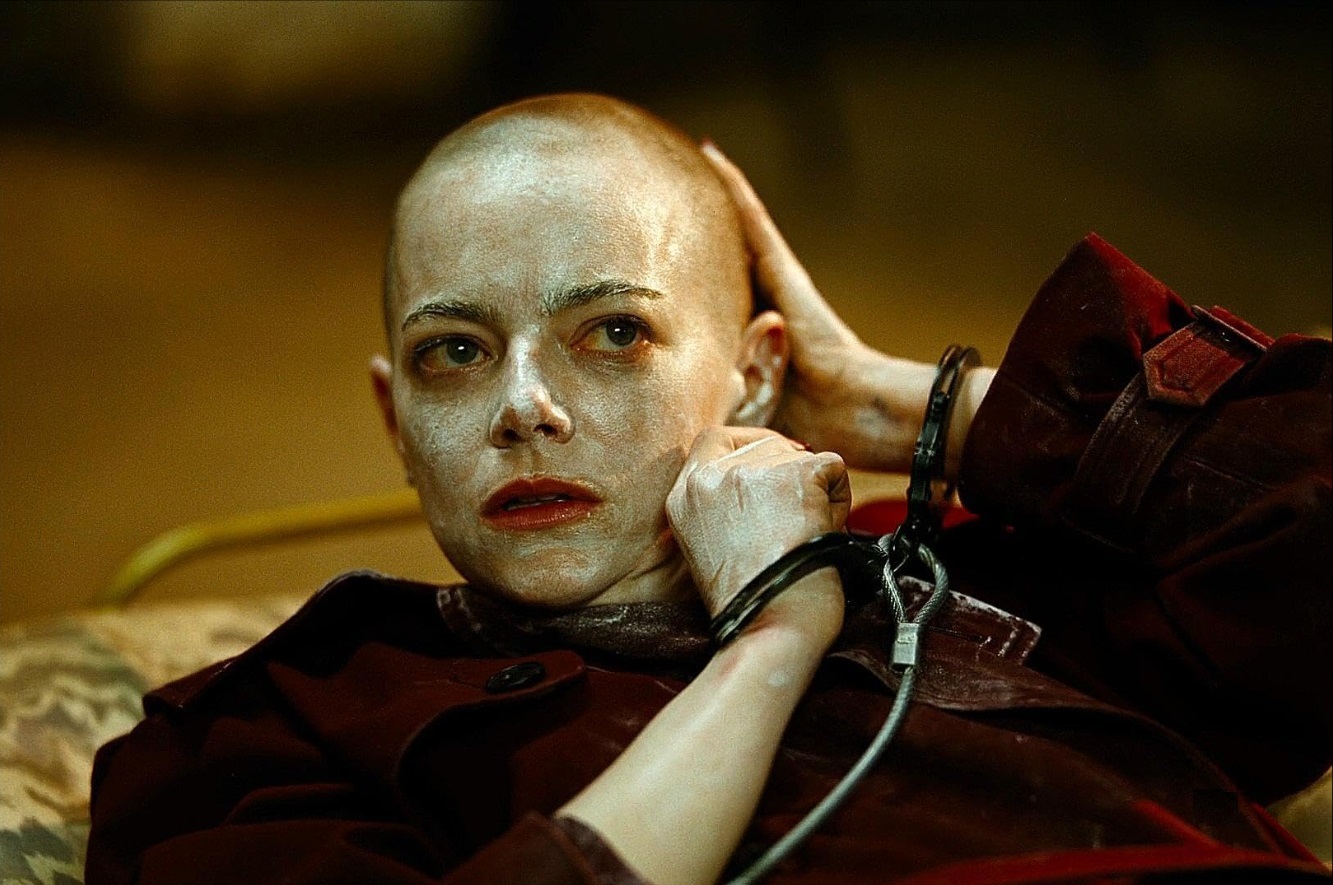
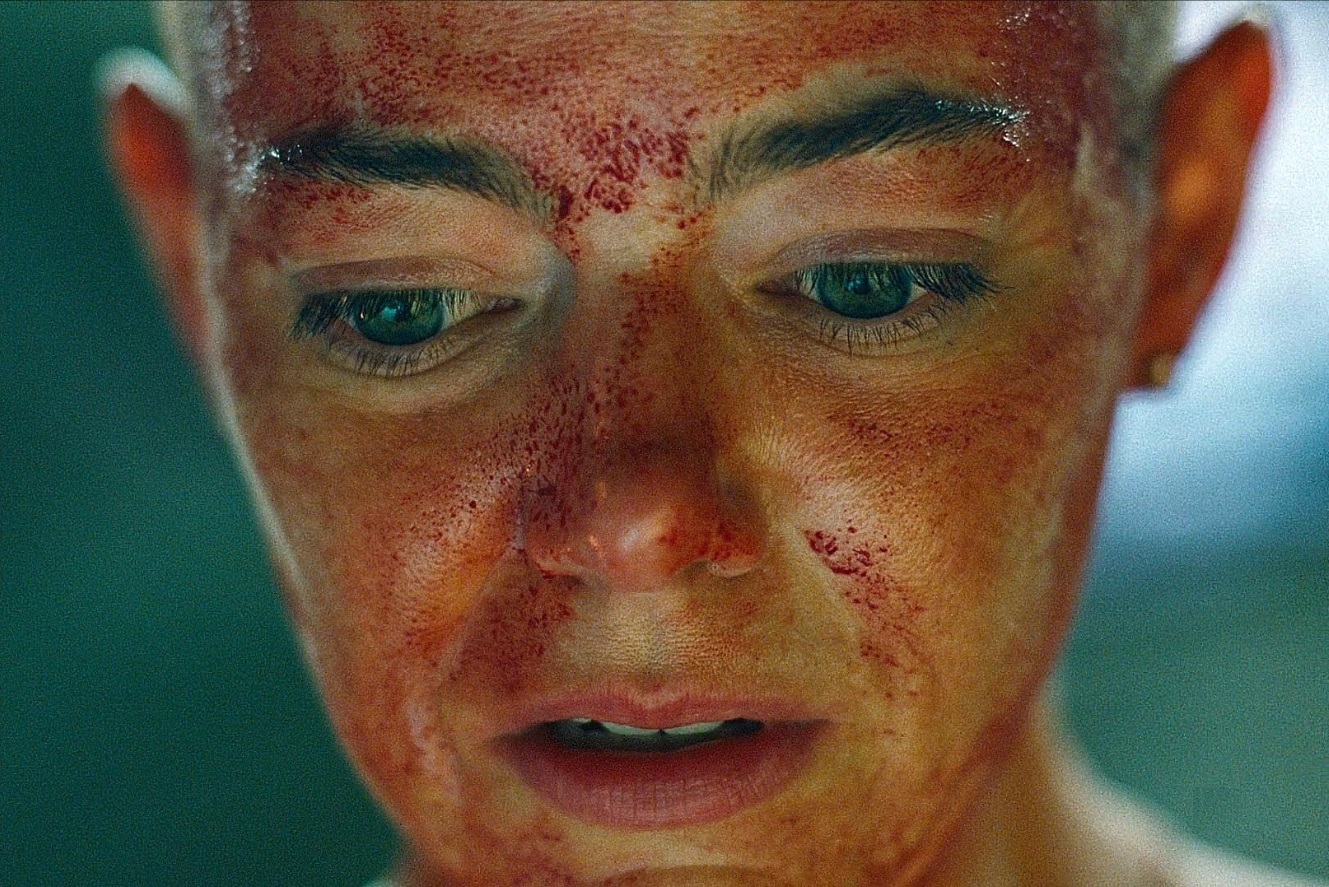
Also captivating as integral elements of Bugonia are the two actors (delivering the aforementioned “deft performances”) in the movie’s main character roles–Emma Stone (as Michelle Fuller) and Jesse Plemons (as Teddy Gatz). Anyone familiar with Emma Stone won’t need me to justify her exceptional talent as an actress and contributions to this or any film’s success…but I will. Just as Stone was the linchpin for standout success in Lathimos’ film Poor Things (2023), she is again in Bugonia. Her portrayal of CEO Michelle Fuller (aka the Andromedan alien suspect) is perfect! Her serious to faux-serious admissions and denials of identity to Teddy are delivered deadpan, as needed, almost robotically, as a human character or alien trait, giving nothing away. Impassive and sarcastic, expressively non-emotive, with arrogant empathy, buried fear, and tactful planning cunningly concealed, Stone perfectly portrays a work-obsessed CEO as much as an Andromedan alien. Thus, she keeps us all the more in the dark about who she really is. Perfect!
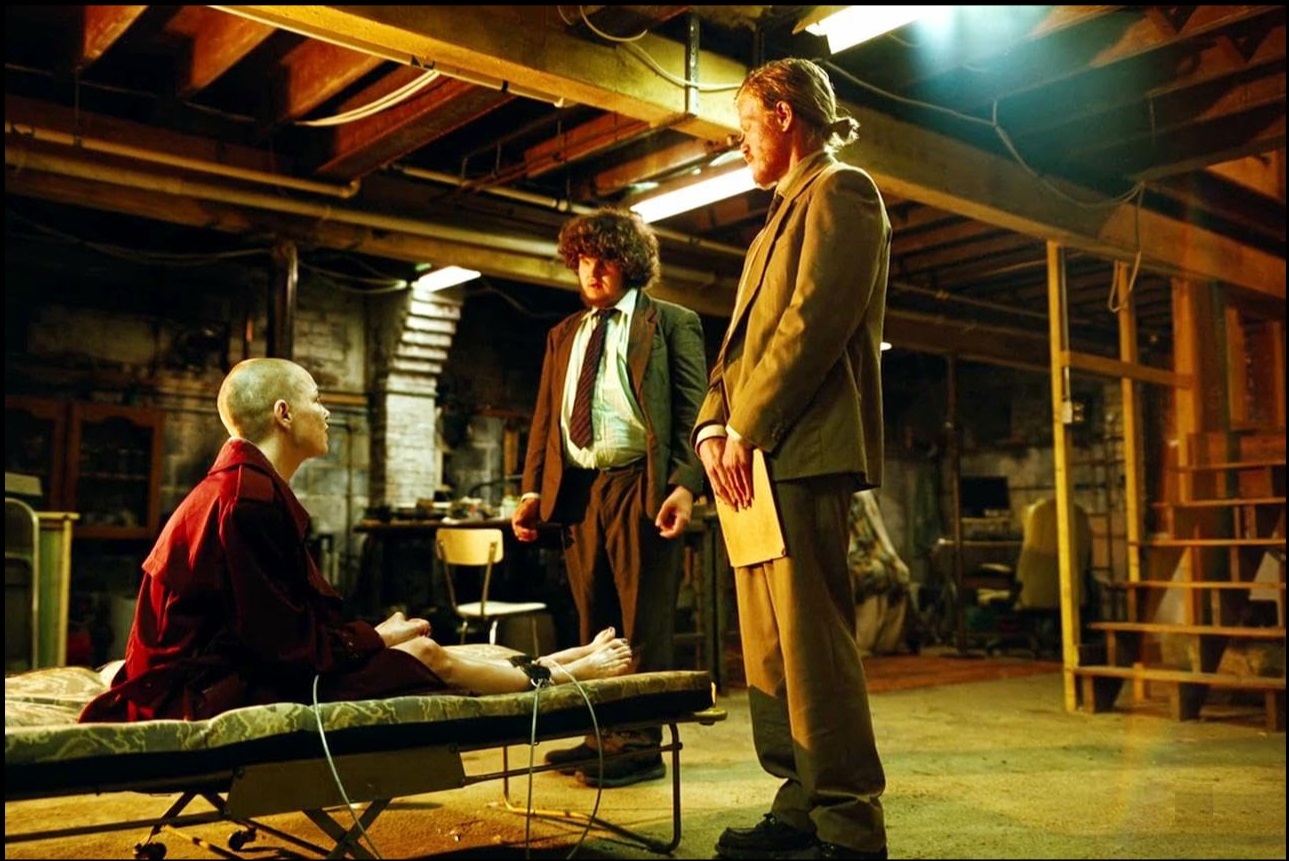
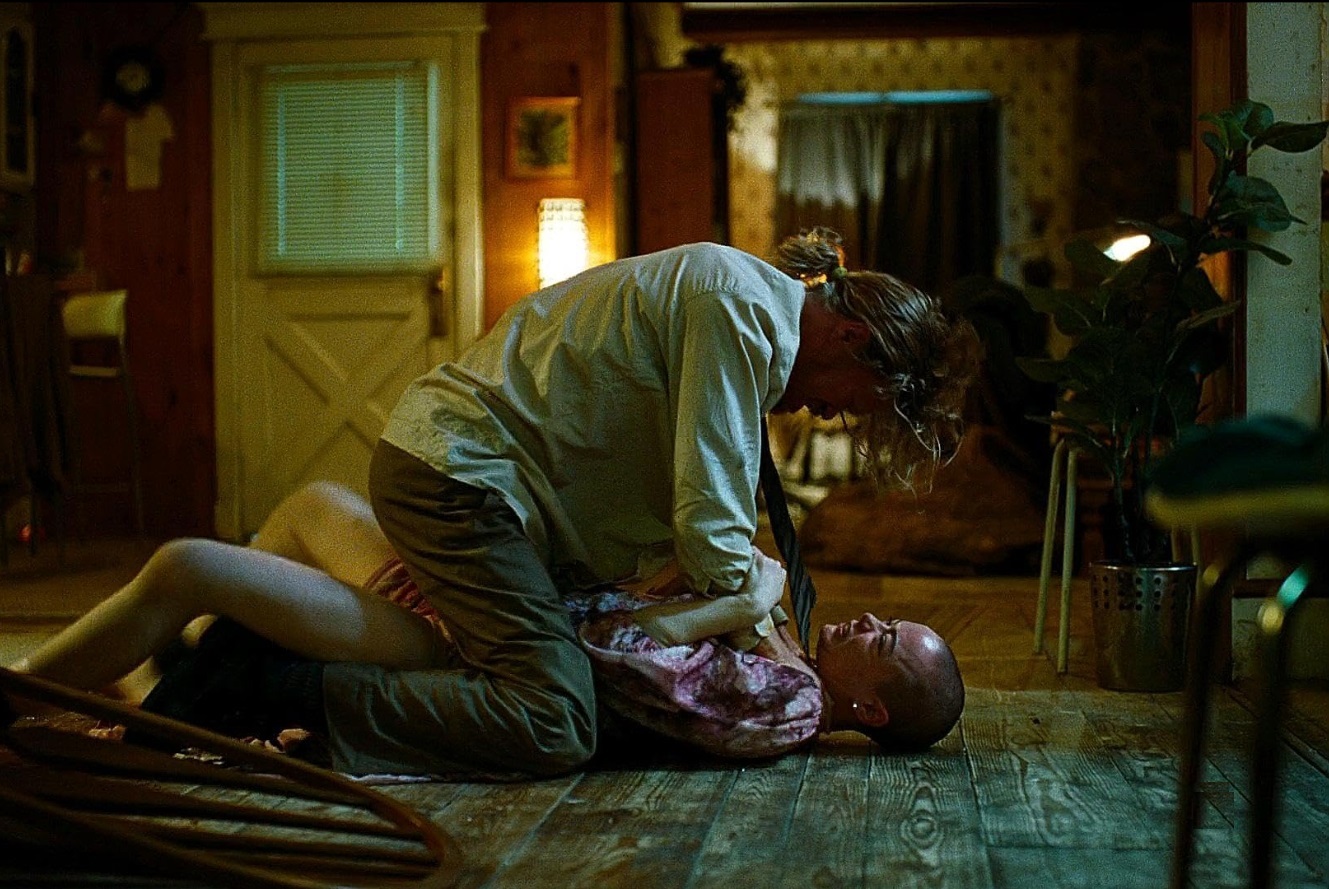
Speaking of linchpin performances, Jesse Plemons here delvers another of equal (or possibly greater) significance. Like Stone, he is perfect for his role. Plemons nails it as Teddy Gatz–a possibly-psycho conspiracy theorist as warm, beguiling and seemingly “normal” (at times) as he is explosive, violent and objectively “abnormal” (at other times). Plemons plays the calm, empathetic, unhinged Teddy in measured amounts, slowly building tension again and again, erupting and relaxing as needed, like the ebbing and flowing of an ocean. With that, saying Bugonia is “light on action” (as I did earlier) needs clarification. Most effective and compensational, thanks to Plemons, is how slow burning scenes explode, unexpectedly, with physical insanity, making the film’s limited action all the more forceful and unsettling when it occurs–just as any great sci-fi/horror combo or otherwise should be. With this, as we come to expect, even calm moments are never really calm; tension is raised with every word, every glance, and every heightened tone of voice. Masterfully, with Plemon’s, the calmer it is, the more violently it may end!
Another most effective element of Bugonia is director Yorgos Lanthimos’s decision to use a non-professional actor, and one who is actually autistic, for the role of Teddy’s autistic cousin and helper Don (Aidan Delbis). Jesse Plemmons–in the bluray’s behind-the-scenes featurette–describes Aidan Delbis as the movie’s “ace in the hole,” and one of the greatest working relationships he’s had in a film thus far, with such an “honest” actor–referring, obviously, to the unforced purity of Delbis’ performance. Lanthimos, who says he likes casting non-professional actors alongside professional actors for the natural dynamic it creates, also says he saw Delbis (as Don) as the “soul” and “voice of logic” in the film and a naturally “neurodivergent” actor. As a viewer and reviewer myself, I certainly see the same “ace-in-the-hole” qualities of Delbis in the role of Don! Why have just an actor, when such authenticity and natural talent is available?
Additionally, with a small but integral role in Bugonia is Alicia Silverstone, as Teddy’s mother, Sandy Gatz. In the bluray’s behind-the-scene’s featurette, Silvestone says she got a call from Yorgos Lanthimos saying he had a small part in a film for her, and she just said “Yes” immediately, because she so much enjoys working with Lanthimos. And a great thing it always is to see such iconic actors from earlier times again in your favorite films. Even in small roles, the best are needed for overall success; and Alicia Silverstone delivers it here…again!
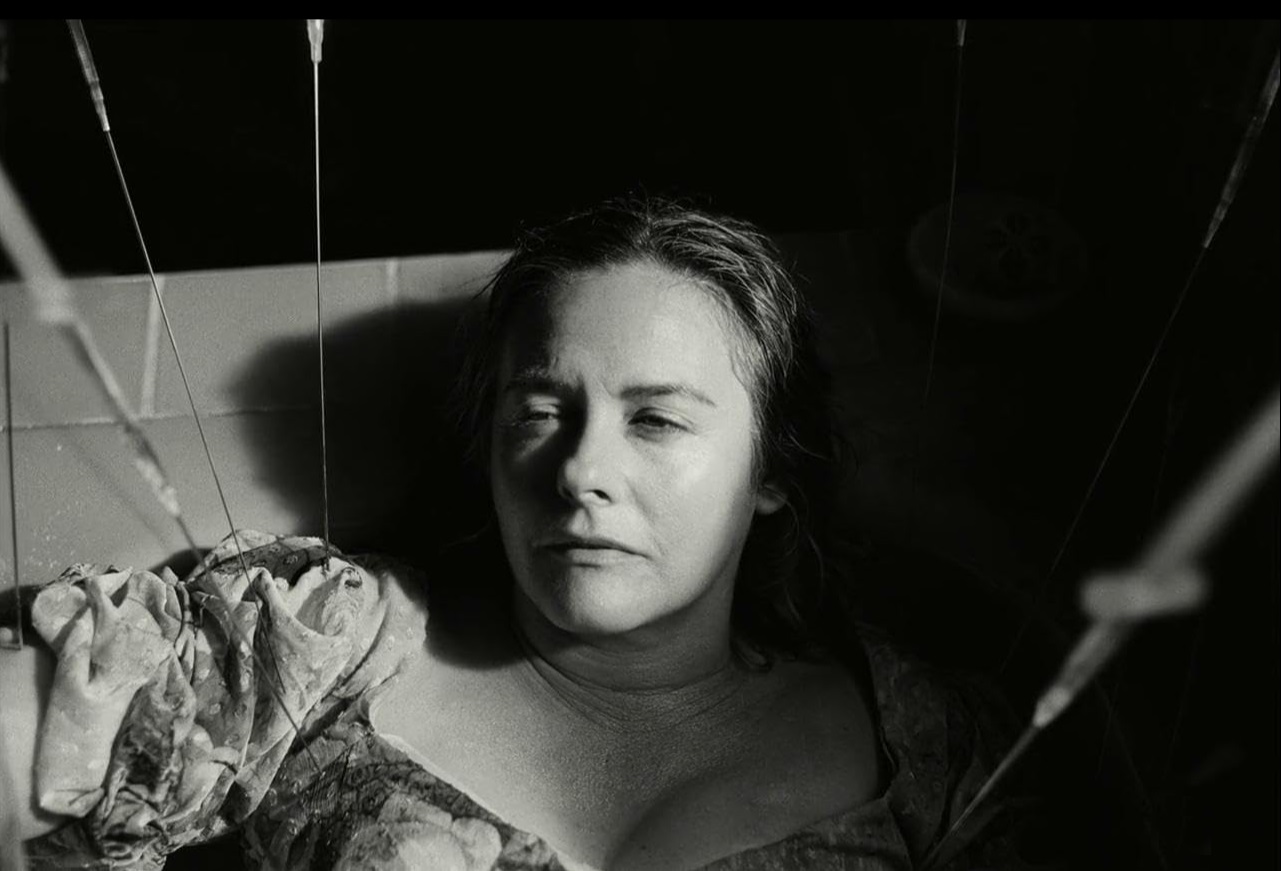
Alicia Silverstone (as Sandy Gatz)
Also interesting and most effective (as explained in the movie’s bluray featurettte) is how director Lanthimos did not allow composer Jerskin Fendrix to read the script before composing the film’s score. Lanthimos only gave Fendrix three words to work with: “bees,” “basement,” and “spaceship.” These words were said to serve as the film’s blend of organic, claustrophobic, and otherworldly elements. And certainly, they do most accurately encapsulate the movie…in just three words. There is an overall focus on bees from the film’s beginning to its end (with many macro-focused shots of bees), much of the movie takes place in a basement and, of course, a spaceship symbolizes the movie’s cosmic, otherworldly connections. With only these words, Fendrix composed a perfectly-matched score, ranging from intimate to cosmic, focusing on contrasts between high-pitched sounds (bees) and low, industrial textures (basement). Lanthimos later used the blindly-composed score as he saw fit in the movie. While it may technically be “force matching,” the resulting harmony suggests the score and the film were always meant to be together. Interestingly, Fendrix mentioned, in the featurette, how he would never have been able to compose such a score had he read the script in advance.
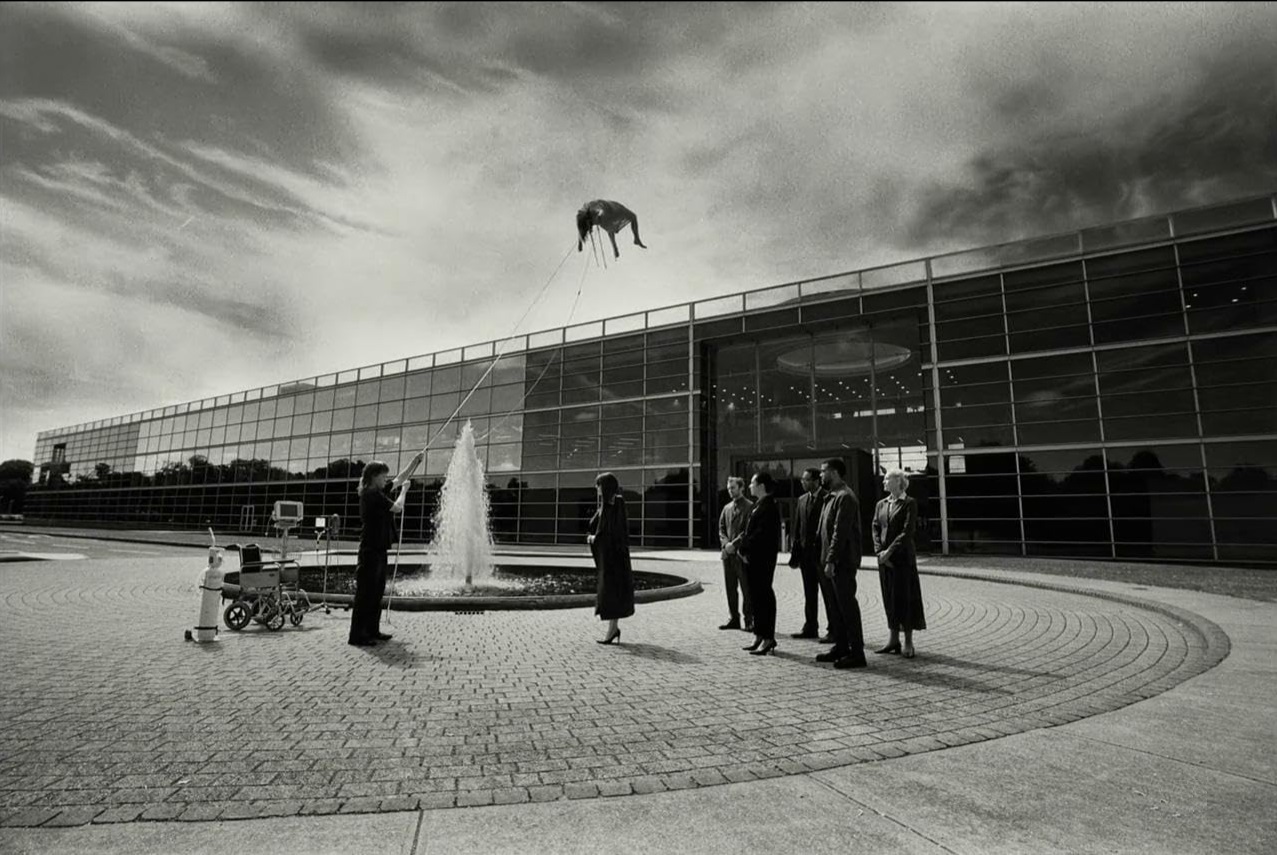
As for special effects, the movie uses a majority of practical props and good old-fashioned liquid blood and latex. Digital effects, used here at a minimum, are realistic, with nothing looking cheesy, fake, or distracting from falling short. As for cinematography, Lanthimos, again in the bluray’s featurette, describes how he uses a vintage1950s Vista Vision camera to film some of the movie (as he also did in his visually-stunning 2023 film, Poor Things). Producing a unique, sharp, deep, high-resolution image, the Vista Vision camera runs its 35mm film horizontally, rather than vertically, doubling the negative size to roughly 70mm quality. This format produces a wider, clearer image with less grain, similar to large-format still photography. Lanthimos explained how he managed to find the world’s only remaining, operational Vista Vision camera that performed to his expectations. And what a unique, truly outstanding quality of lush, deep visuals this adds to Bugonia!
Possibly most importantly, what makes Bugonia work best (as I must stress again) is how the writers (Will Tracy and Jang Joon-hwan) never reveal too much, never giving us a reliable clue about how it will end or who anyone is–if characters are truly crazy or “normal,” aliens or Earthlings. While we may think we know, because of how we think it must end to be a good movie, etc., we never really know. Just as too many details in this review would spoil the movie, so would too many details in the movie itself. And thus, with writer restraint, we have the most important ingredients for the best of movies and the best of reviews–an ending kept unknown to the end.
What’s more about Bugonia‘s writing is that it’s been written before. It’s actually a remake of a South Korean science fiction dark comedy titled Save the Green Planet, (written by and directed by Jang Joon-hwan), already considered a cult classic itself. Like the original, Bugonia explores themes of corporate control, systemic classism, sociopolitical paranoia, and the destruction of the Earth, it’s ecosystem and humans in general. Yes! If you hadn’t already figured it out, Bugonia, as well as it’s original, have strong, face-slapping messages about the environment, with ecological doomsday scenarios front and center! BUT, oh what fun it is!
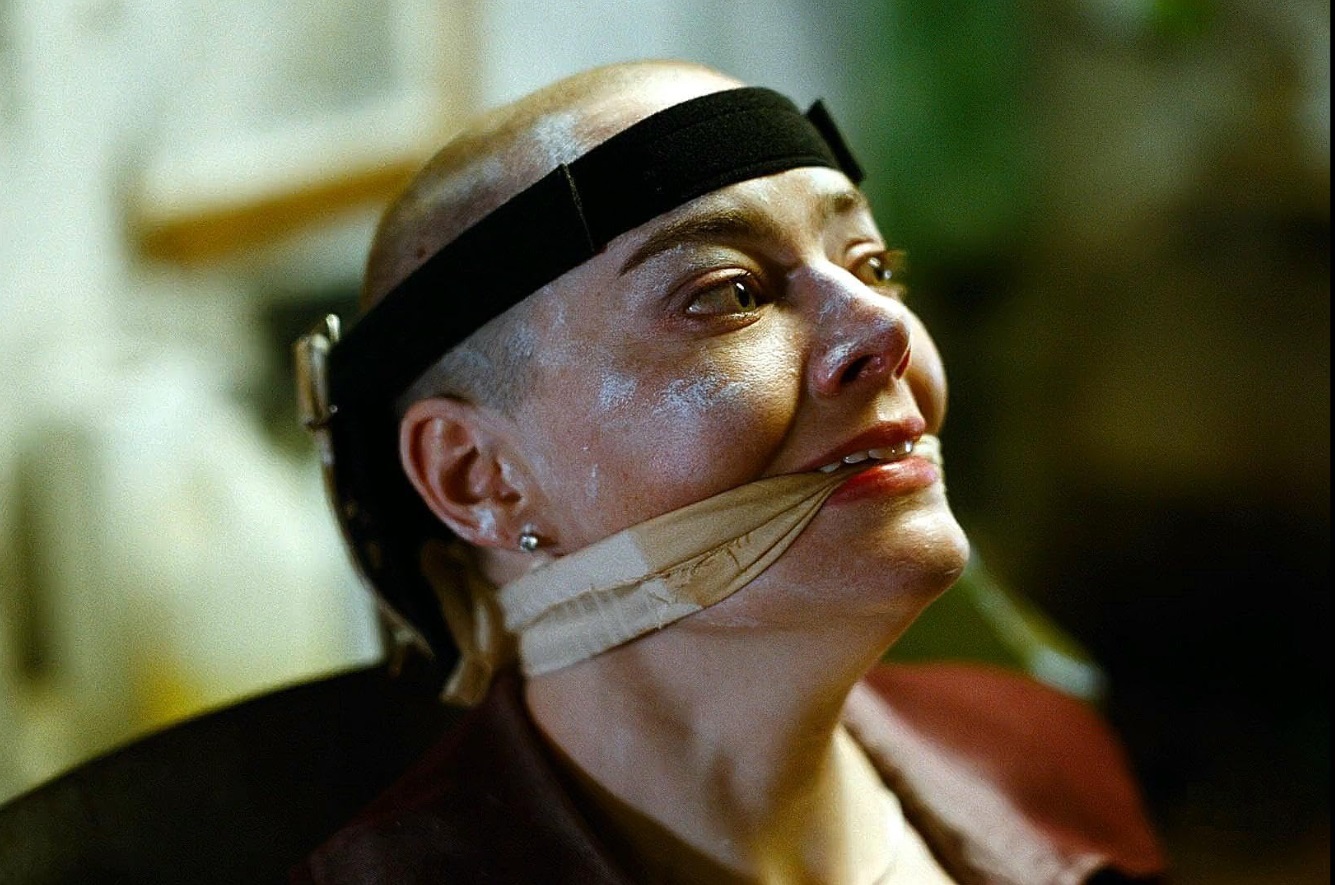
“And what about the title Bugonia? What about it’s meaning,” you ask? It’s actually a question well worth asking and answering. The term Bugonia (as also explained by director Yorgos Lanthimos) refers to an ancient Greek belief that bees spontaneously generate from dead oxen carcasses–a belief propagated by beekeepers to maintain healthy hives or revive dying ones. “The concept connects to themes of authority and responsibility for creating a populace, while also highlighting the inability to fully control or understand it.” ~ Google AI (And YES, I give credit to AI.)
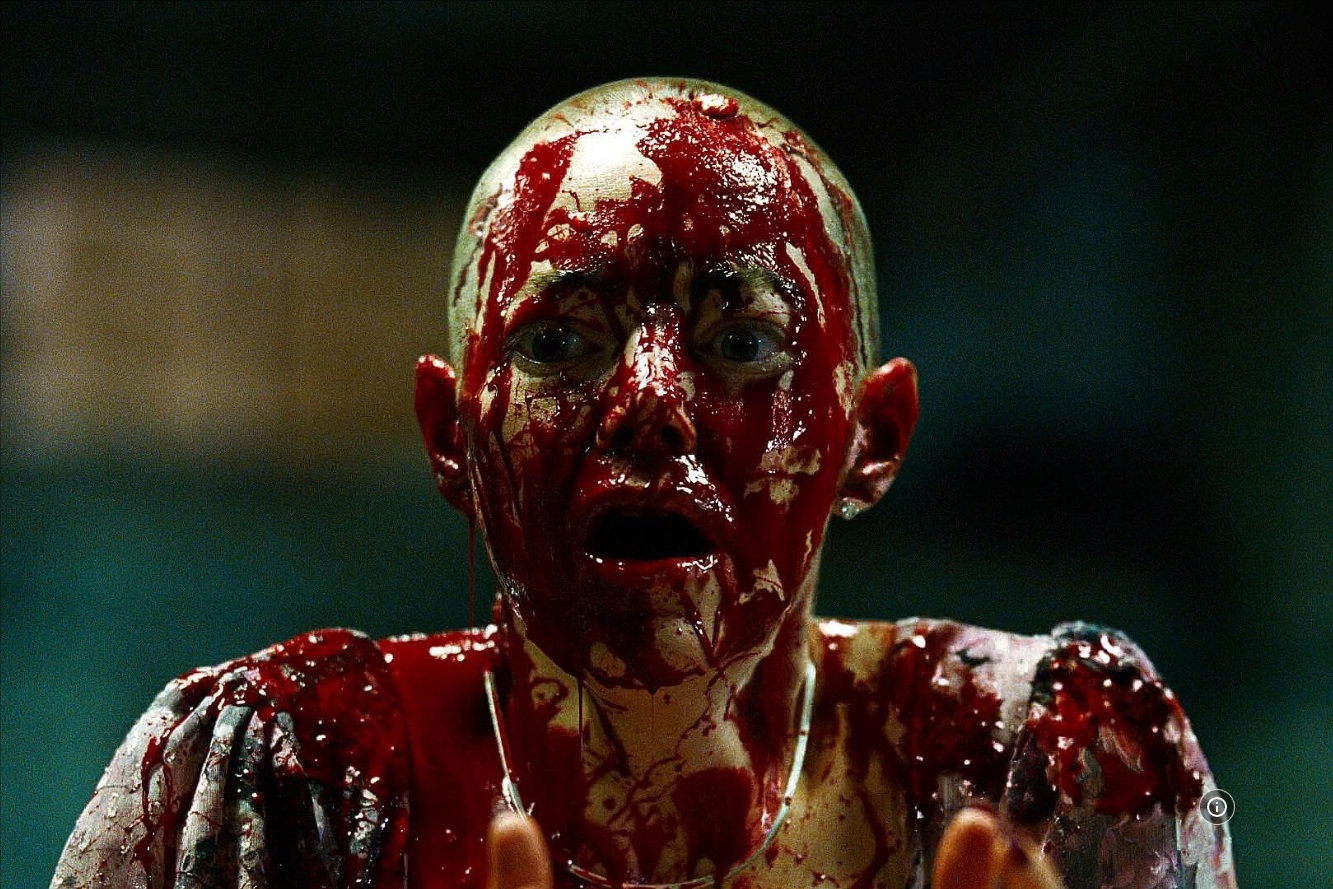
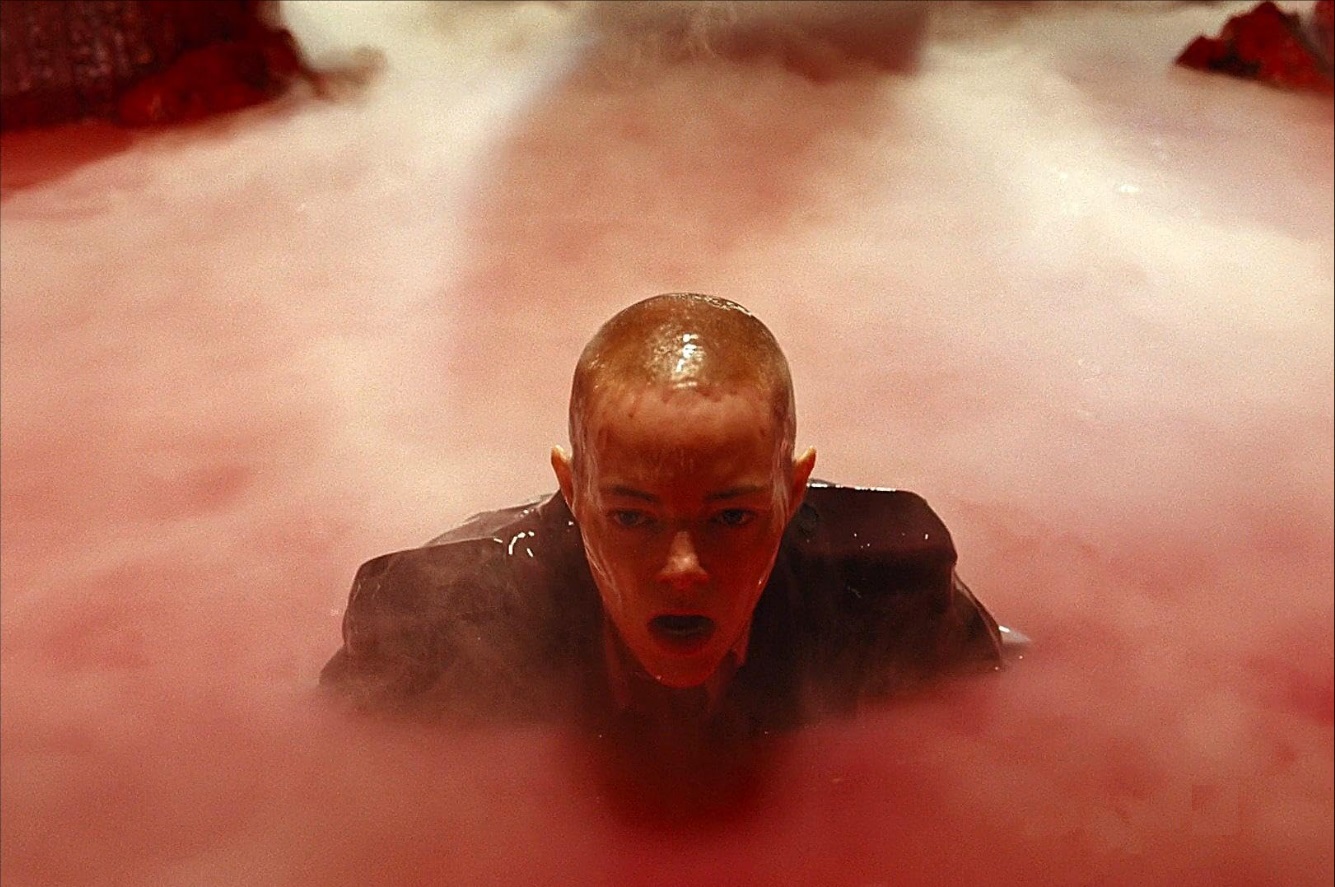
Bugonia received four Academy Award nominations: Best Picture, Best Director, Best Actress, and Best Original Score. It was also nominated for five BAFTA (British Academy of Film and Television Arts) Awards: Best Director, Leading Actress, Leading Actor, Adapted Screenplay, and Original Score. With or without its academic pedigrees and nominations, Bugonia is not a movie for everyone, but certainly a movie for many. Those with more traditional tastes, for movies with more action than talk, may hate it. Lovers of character studies, intelligent dialogue, and impulsive, sometimes explosive action, may love it . Added to the draw is a film that doesn’t give up its secrets, keeps you guessing to the end, and still surprises! Better yet are awesome, Academy Award nominated performances by actors who deserved to win (in my opinion). Until you see Bugonia, and in case a possible ending is true, cover your windows with aluminum foil, be nice to the bees and, for God’s sakes, don’t shave your head! “Why?” you ask. You might not like yourself bald…and Andromedans may not give a damn anyway! Only the words of the ingenious (or hopelessly insane) Teddy Gatz may be revered…maybe:
“We don’t need to talk. Because I know exactly what you’re going to say. You’re going to say that I’m in some kind of internet-induced, autohypnotic feedback loop, and-and gatekeepers, and-and norms, and all that weak hegemonic horseshit. But that is precisely the limp-dick rhetoric that you’ve been instructed to counter the human insurgency with. That’s the hyper-normalized dialectic by which you’ve convinced 7.5 billion people that they’re not your captives. To keep us believing in these false institutional, ‘shy-boleths.'” ~ Teddy Gatz, in his retort to Michelle Fuller (1:14;49 – 1:14:08)

Rocket Rating – 7.5
Chris Rennirt is a movie critic and writer in Louisville, Kentucky, as well as editor in chief at Space Jockey Reviews. He has been a judge at many film festivals, including Macabre Faire Film Festival and Crimson Screen Film Fest, and he attends horror and sci-fi conventions often. Chris’ movie reviews, articles, and interviews appear in Effective Magazine and are published regularly on Space Jockey Reviews.